Ease off what hurts
Skip anything that makes the pain worse for now. Let the knee tell you when it's ready for more.

Reviewed by Marcus Hale, Physiotherapist, September 2026
An ACL tear means a long run of rehab, and maybe an operation too. Whether to operate is decided with an orthopaedic surgeon, and it's your call. We run the rehab either way, and plan your training around it. {promise:sports-staged-return}Each stage ends with a test you pass before the next.
Includes a torn or ruptured anterior cruciate ligament, and rehab before or after a reconstruction.
The tear
One of the four ligaments in the knee, torn partly or right through.
The ACL is one of four ligaments holding the knee's bones together. It can tear part of the way, or all the way through. Once it's torn, the knee is often unstable. That raises the odds of more damage inside it.
Often
A sidestep or a turn while the knee is taking your weight.
Knee injuries happen a lot when the knee twists with your weight on it. They're common in footy, netball, basketball and skiing. Most ACL tears are in young, active people.
Sometimes
The knee's cartilage cushion, or the joint lining, hurt at the same time.
The meniscus, or the cartilage lining the joint, can be damaged along with the ACL. A scan shows it, and what it shows can change your options.
Whichever way you go, the long part is the rehab. Australia's knee surgeons agree that structured rehab improves results on both paths.
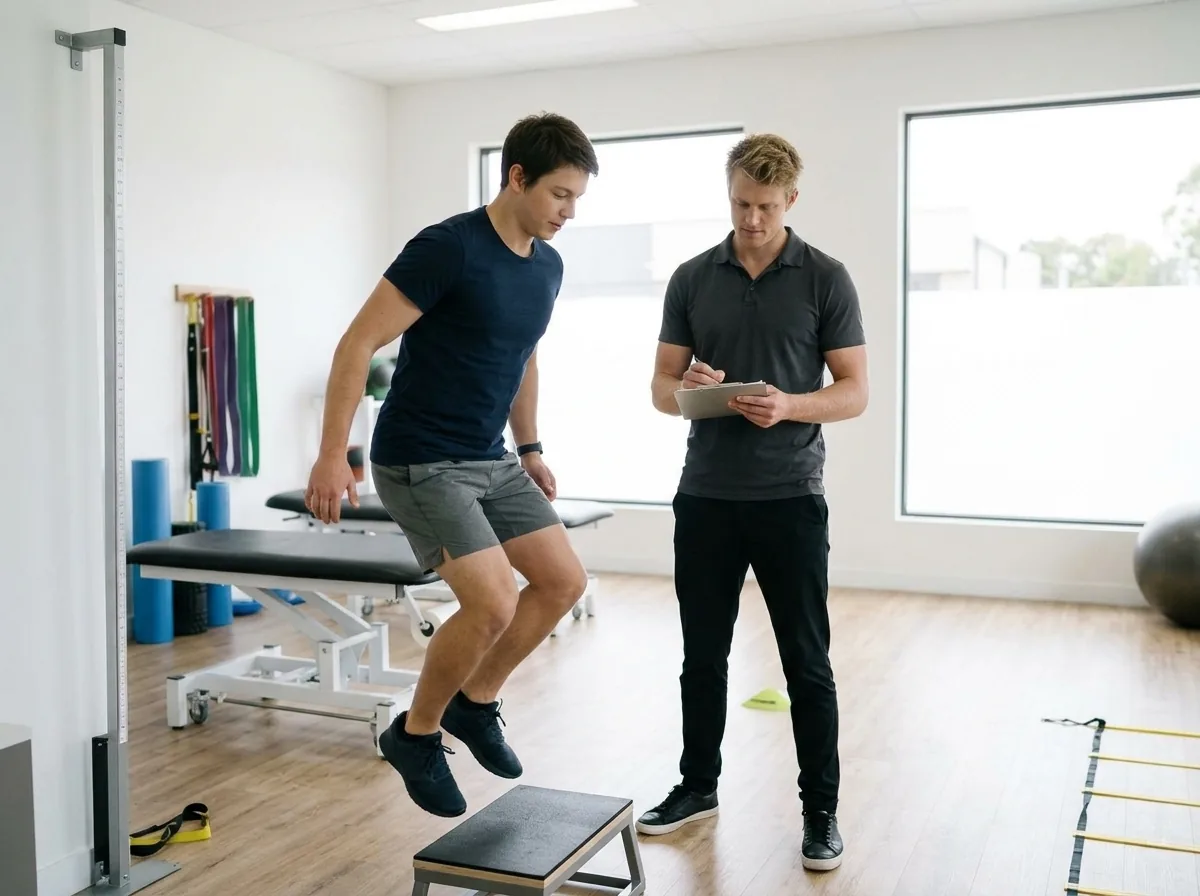
A knee checked in the first days can mislead, so a scan is usually worth having.
{promise:refer}If it looks like your ACL, we'll send you to your GP for one, and on to an orthopaedic surgeon.
Some people do, and keep surgery for later if the knee isn't up to what they need.
It tends to suit older, less active people. For people heading back to footy or netball, that path hasn't been studied enough yet.
Strength work while you wait can build up your thigh going in.
After the operation, it's your surgeon's plan. {promise:surgeon-plan}We follow your surgeon's instructions on what to avoid and when, and check with them if anything's unclear.
Strength and balance come first.
The turns and landings of your sport come last. Your other training is planned around the knee, not dropped.
Jess runs before and after surgery rehab here, with updates to your surgeon.
Source: healthdirect, "Knee injuries", last reviewed December 2023; Australian Physiotherapy Association, ACL injury management guideline, October 2022
See your doctor if:
Go back to your doctor if the pain or swelling isn't better in a few days, it's getting worse, or you get a fever or redness in your knee.
If you have an ACL injury, you should see an orthopaedic surgeon, urgently or fairly soon. Ask your GP.
In the first few days after the injury, alongside seeing your GP:
Skip anything that makes the pain worse for now. Let the knee tell you when it's ready for more.
Sit or lie with the knee higher than your heart. A firm bandage helps keep the swelling down.
And the massage, while the knee's injured. Hard training waits until it's healed.
Already seen your GP, or waiting on a surgeon? An assessment is where the rehab starts. No GP referral needed for private physio.
About 45 minutes, one-on-one the whole time.
What happened on the day, and what you've been told since.
Your sport and your season. If you have a scan report or a surgeon's letter, bring it.
Swelling first, then how far the knee bends and straightens. Thigh strength, one side against the other.
Walking and balance, if it's safe. If it's still very swollen, some of this waits a few days.
{promise:consent}We'll tell you what each test is for, and ask before we touch.
{promise:explain}What we think is going on, in plain English, and where the research on each path runs out.
{promise:refer}If you need a scan or a GP first, we'll say so.
The first stage of your rehab, and the test that ends it.
{promise:home-exercises}You'll have your exercises written down or in an app, with what each one's for.
{promise:visit-estimate}We'll tell you roughly how many visits we expect, and why. {promise:visit-estimate}If that changes, we'll tell you.
No packages to buy. You book one visit at a time.
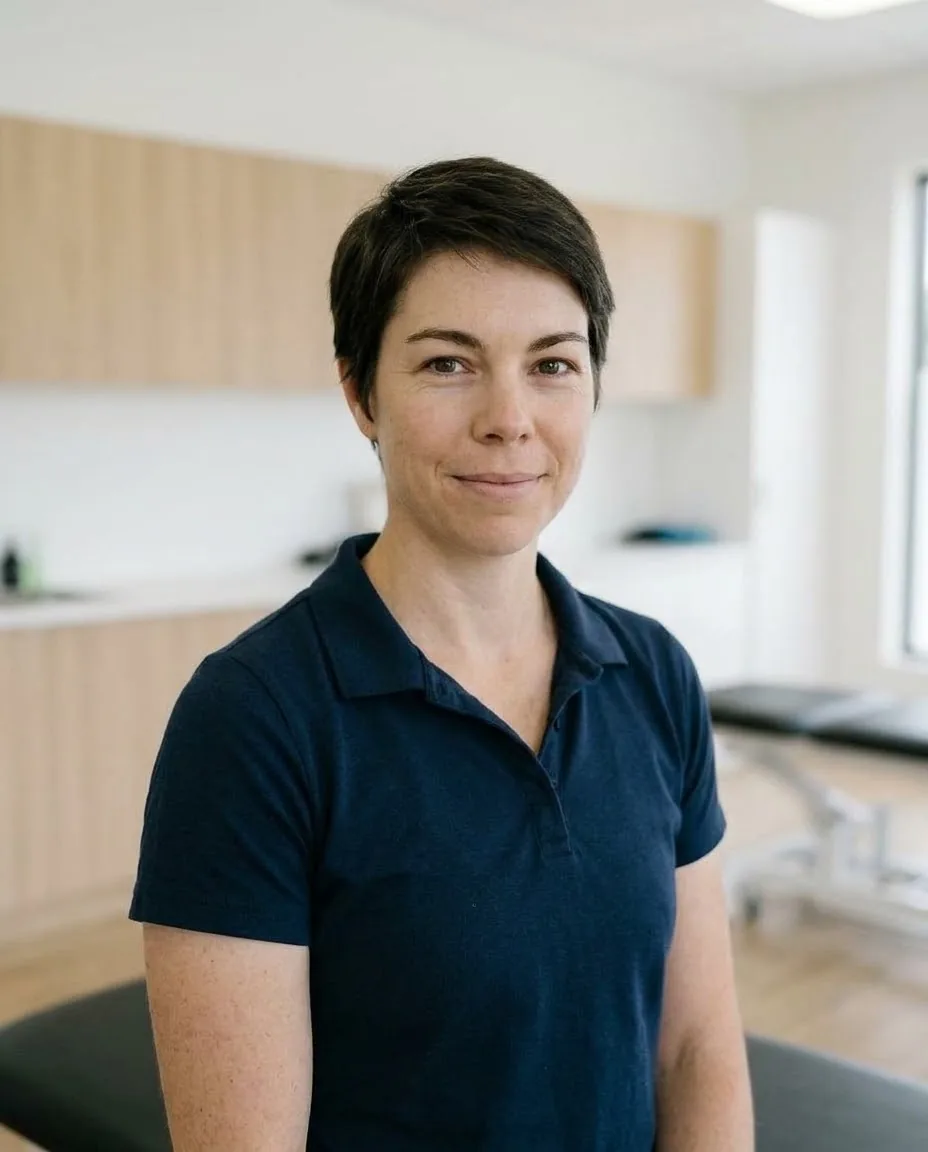
“I coached junior footy for ten years, so I plan rehab around training nights.”
ACL injuryKnee painSprained ankle
Book onlineThat depends on your knee, and on what you need it to do. It's decided with an orthopaedic surgeon, and the final say is yours. We'll walk you through each path, including where the research runs out.
Yes, and some people do. One trial followed young, active adults on both paths, and at two and five years they reported similar knee function. About half of those who started with rehab had surgery within five years. It isn't for every knee: a repairable meniscus tear is one reason to skip it, and there's little research in under-18s.
It's a long stretch of rehab, and we won't put a date on it at the first visit. You move up a stage when you pass its test, like a hop, not when a set number of weeks is up. After surgery, your surgeon has a say in the timing too.
Usually, yes, with the knee's part changed for now. We'll work out what it handles today, and build your sessions around that.
Not as the treatment. The surgeons' own consensus says the role of bracing after an ACL injury is still uncertain. If your surgeon wants you in one after an operation, we'll work with it.
Pick a time online, or call and we'll help you choose the right appointment.