
Light the way
Turn lights on when you walk around, and leave a hallway light on at night for the trip to the bathroom.
Reviewed by Maria Santos, Principal physiotherapist, October 2026
Feeling unsteady on your feet can have several causes, from weaker muscles to a slippery floor. For people living at home, exercise that works on balance and everyday movements lowers the number of falls. We'll tell you what we think is behind it for you, and what to work on first.
Includes feeling unsteady on your feet, getting going again after a fall, and worry about falling.
Muscles, joints and the feeling in your feet change with time.
Our bodies change slowly as we get older. Muscles can get weaker, joints can ache, and there can be less feeling in the feet. That can make it harder to lift your feet, or to feel steady when you walk.
A fall can knock your confidence, even when you weren't hurt.
Doing less is natural, but it can mean poorer balance and weaker muscles over time.
Some medicines, low blood pressure or poor sight can play a part.
Some medicines, low blood pressure when you stand up, and conditions like arthritis, Parkinson's or diabetes can affect how steady you are. So can your eyesight.
Dim rooms, loose rugs and wet floors can catch anyone out.
{promise:home-hazards}Poor lighting, loose rugs, and wet or polished floors all make a slip more likely. A fall doesn't mean you weren't concentrating, or that you're clumsy. There are many possible reasons.
Exercise that works on balance and everyday movements lowers the number of falls for people living at home. Researchers rate that evidence as high quality.
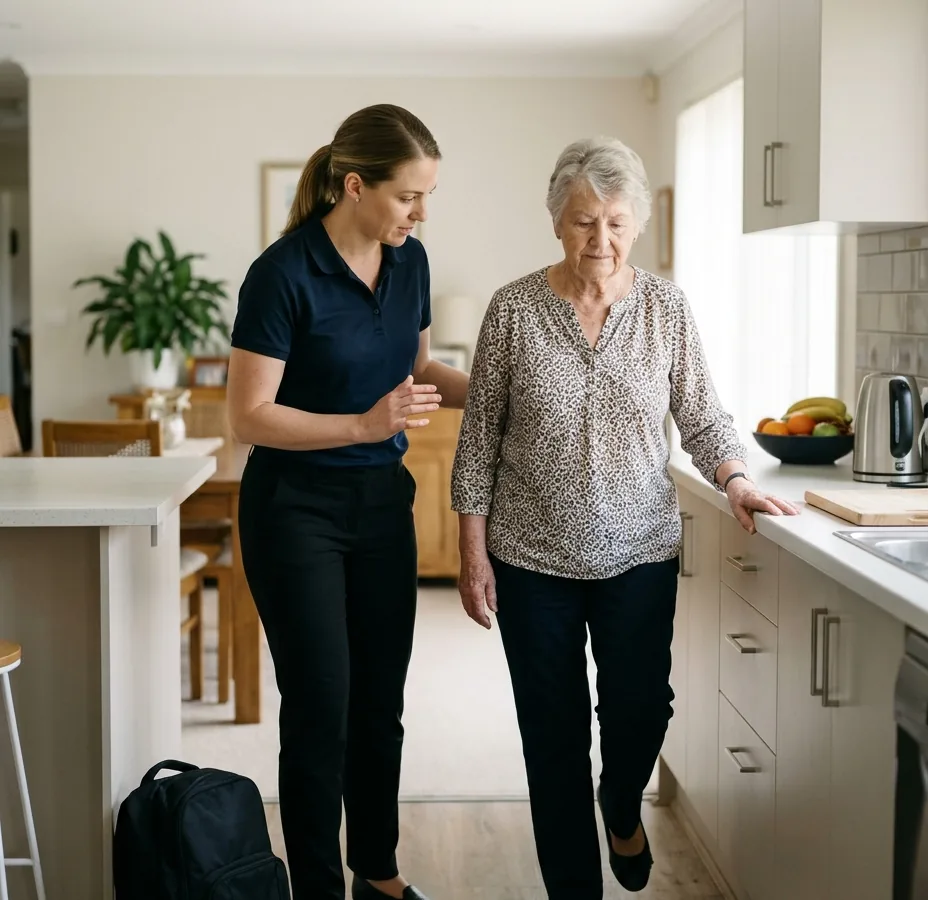
How you stand, walk and turn.
Getting up from a chair. Your strength, and the feeling in your feet.
We choose a few exercises to suit what you do each day.
Programs that mix the two probably lower falls as well. We write them down simply, and change what's too easy or too much.
Exercise may ease that a little, at least straight after a program.
The research can't yet say how long that lasts.
If something needs your GP, like your medicines or your eyesight, we'll tell you.
We can also do all of this at your place, where the stairs and the bathroom are the real test.
Source: Stroke Foundation, "Signs of stroke"; healthdirect, "Older people and falls", last reviewed September 2025; healthdirect, "Head injuries", last reviewed November 2025
Call 000 straight away for signs of a stroke, even if they go away. Think F.A.S.T.: a drooping face, not being able to lift both arms, slurred speech. Other signs can happen alone or together:
Go to your nearest emergency department or call 000 and ask for an ambulance after a severe fall.
Get emergency help if you hit your head and vomit more than once, or have a fit (seizure). Call 000 if someone hits their head and is knocked out.
See your GP after any fall, even if you feel fine and weren't hurt, and about any dizzy spells or fainting.
Turn lights on when you walk around, and leave a hallway light on at night for the trip to the bathroom.
Take up old mats and loose rugs, and tuck away electrical cords, so there's less to catch a foot on.
Wear well-fitting shoes rather than loose slippers around the house, as well as when you go out.
Not sure what to change at home? A home visit looks at it with you. No GP referral needed for private physio.
The steps are timed for a 45-minute clinic visit. A home visit takes 60 minutes. Both are one-on-one.
What's been happening, any falls, and what you want to keep doing.
{promise:family-welcome}A family member is welcome to be there.
How you stand, walk and turn, how long it takes to get up from a chair, your strength and the feeling in your feet.
{promise:consent}We'll tell you what each test is for, and ask before we touch.
{promise:explain}What we think is going on, in plain English.
{promise:refer}If you need a scan or a GP first, we'll say so.
{promise:home-exercises}You'll have your exercises written down, with what each one's for.
A few, picked so you can do them next to the kitchen bench.
A home visit is $150 for 60 minutes, travel included. No packages to buy. You book one visit at a time.
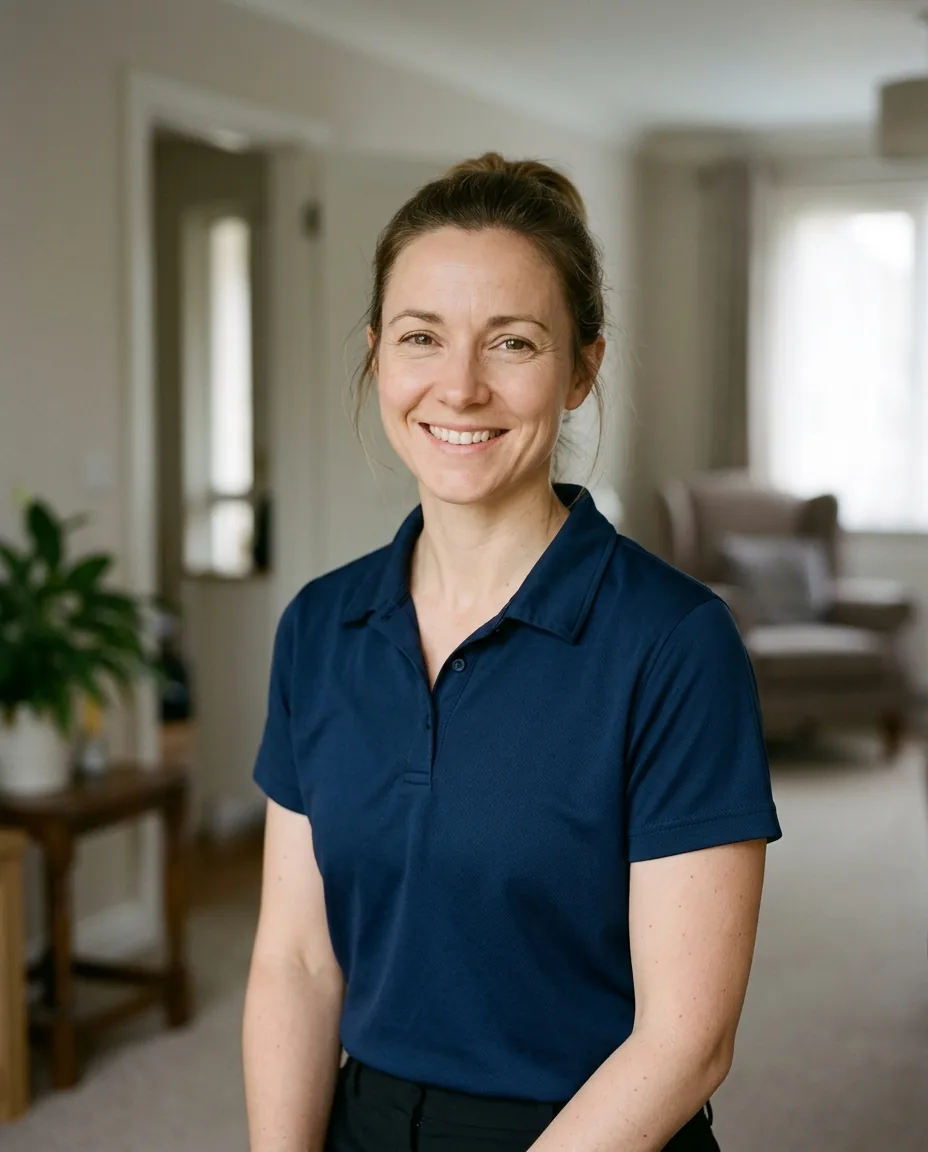
“I've done home visits for eighteen years. The kitchen bench is my favourite piece of equipment.”
Balance and fallsKnee arthritisHip pain
Book onlineYour GP. A fall can be a sign of a new health problem or a side effect of a medicine, so healthdirect advises seeing your doctor after any fall, even if you feel fine. We're happy to work alongside them.
Our bodies do change as we get older. But staying active helps you stay strong and improve your balance, whatever your age. We'll look at what's changed for you, and what's worth working on.
Not necessarily. If an aid would help, we'll explain why, check it's the right height, and show you how to use it.
healthdirect suggests older people aim for 2 or 3 hours of physical activity every week, and a program from a physio can be part of it. We'll start with a few exercises that fit your day.
Come to the first visit if they're happy for you to. We keep the exercises few and written down simply, so they're easier to keep up. With their permission, we'll keep you in the loop.
Call and ask. If we're not the right fit for your problem, we'll tell you.