Pelvic floor exercises at feeds
Squeeze and lift as if you're stopping a wee, hold for up to 5 seconds, then relax. Repeat 10 to 15 times, at a feed or lying down.

 Reviewed by Claire Donovan, Principal physiotherapist, September 2026
Australian guidance suggests building up to running over the first few months, and having your tummy and pelvic floor checked before you start.
We do that check, then build your running back in steps, around your sleep and your baby.
{promise:refer}If you need a GP first, we'll say so.
Also called return to running postpartum, or getting back to exercise after pregnancy.
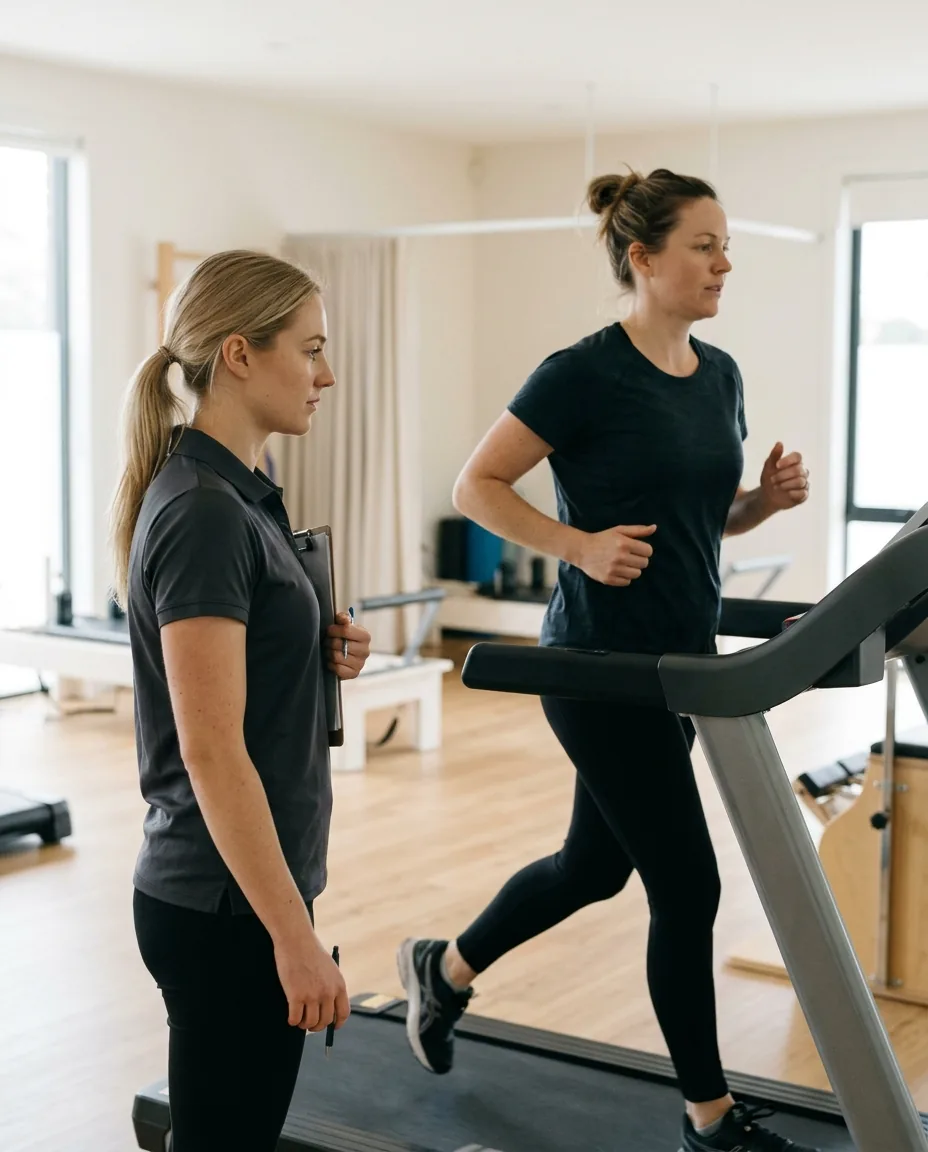
For up to 6 months after the birth, pregnancy hormones can still affect your joints and ligaments. That can make an injury more likely.
Pregnancy can weaken your pelvic floor, and a long labour or a difficult birth can stretch it.
Running is high impact, which is why the guidance takes you there in stages.
They usually come back together after the birth, but sometimes they stay apart. The check before you run looks at that too.
Broken sleep and overdoing it can make an injury more likely. So we plan the build-up around the nights you're having.
Physio after pregnancy starts where Pelvic Floor First suggests: a check of your tummy and pelvic floor before you run.
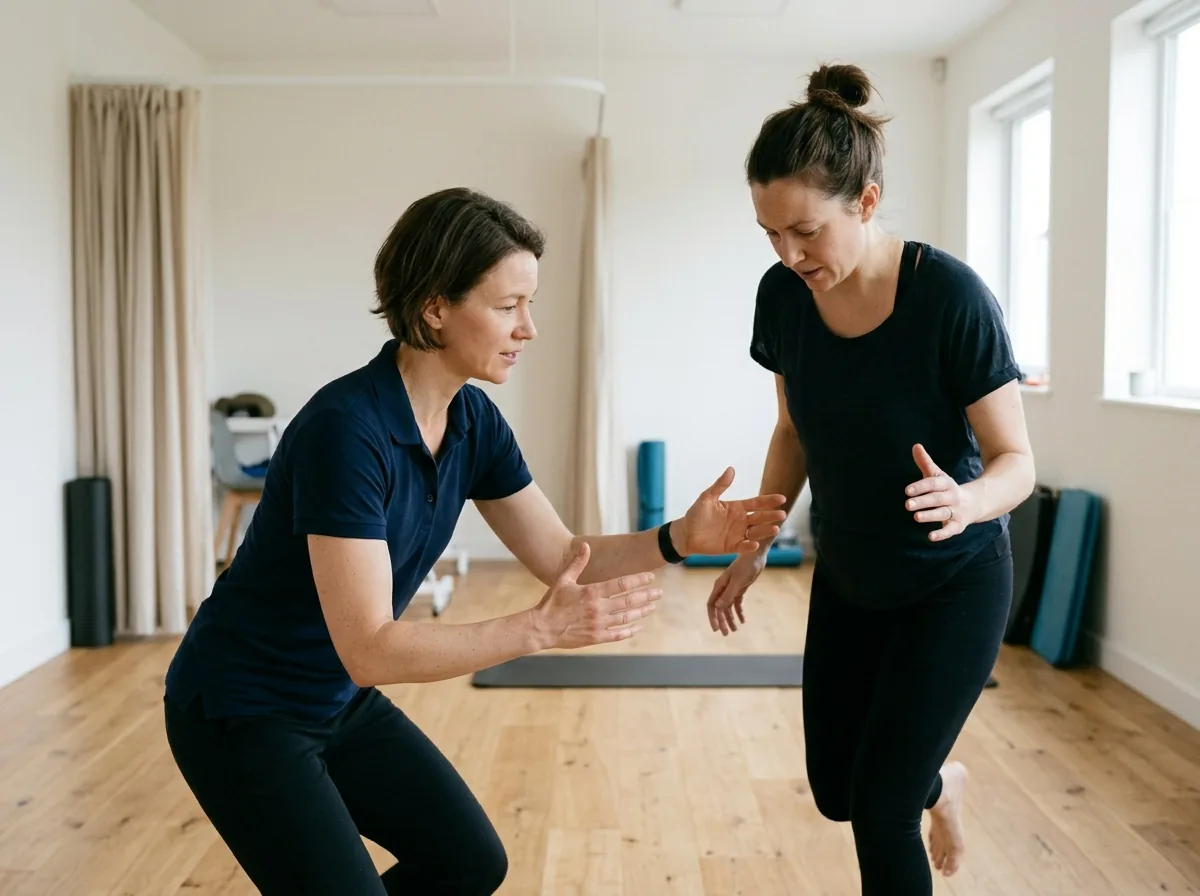
We look at how your tummy and pelvic floor are working, and how they cope as the load goes up.
Walking and low-impact work, then strength, then short runs.
We move on when your body's coping with the step before.
Pelvic floor training is an effective way to support your pelvic floor.
With steady practice, many women notice a difference within 6 to 8 weeks.
Pelvic Floor First names back pain, heaviness in your vagina, or leaking during or after exercise.
If one shows up, we change the plan.
Our postnatal classes, four to a class, are a steady way to build strength before you run.
A guide from Pregnancy, Birth and Baby and Pelvic Floor First, never a deadline. How soon you're ready depends on you and your birth.
Gentle pelvic floor and tummy exercises from the first few days, stopping if anything hurts. Short walks, perhaps with the pram, building up at your own pace.
Once you've had your 6-week check with your doctor, low-intensity, low-impact exercise can start. Pregnancy, Birth and Baby suggests no running for at least 3 months.
Intensity can go up from 12 weeks. Pelvic Floor First suggests a physio check of your tummy and pelvic floor here, before running or other high-impact exercise.
Pregnancy, Birth and Baby suggests 4 to 6 months after the birth before you go back to your previous level. Start slowly if you didn't exercise in pregnancy.
Source: Pregnancy, Birth and Baby, "Safe return to exercise after pregnancy", last reviewed August 2024; healthdirect, "Urinary retention", last reviewed May 2026; "Bladder prolapse", last reviewed October 2024
Call 000 if you need urgent medical help.
Get urgent medical help if you can't wee at all, even though your bladder feels full.
Stop exercising and talk to your doctor if it causes pain, or anything else that worries you.
See your GP if you feel pressure or a dragging feeling in your vagina, or notice a lump bulging out of it.
Squeeze and lift as if you're stopping a wee, hold for up to 5 seconds, then relax. Repeat 10 to 15 times, at a feed or lying down.
A walk pushing the pram is a good way back. Build up the time and pace slowly, towards 30 minutes a day if you can.
Before anything high impact, cough or jump with a full bladder. If you don't leak, you're probably ready for harder workouts.
Still leaking once your baby's over 3 months? Talk to a physio or your doctor. You don't need a referral to see us.
About 60 minutes, one-on-one, with Hannah.
Your birth, and how your recovery has gone so far.
The running you did before the baby, and what you'd like to build towards.
Your tummy muscles and pelvic floor, and when you're ready for it, how they cope with a hop or a jump.
{promise:consent}We'll tell you what each test is for, and ask before we touch.
If an internal exam would help, Claire does it. {promise:pelvic-internal-optional}It's always your choice. We'll explain why it might help. If you'd rather not, we'll assess you another way. You can change your mind at any point, even partway through.
{promise:explain}What we think is going on, in plain English.
{promise:refer}If you need a GP first, we'll say so.
Your first step, and the next one after it.
{promise:home-exercises}You'll have your exercises written down, with what each one's for.
{promise:visit-estimate}We'll tell you roughly how many visits we expect, and why. {promise:visit-estimate}If that changes, we'll tell you.
Bring your baby if you need to. You book one appointment at a time.
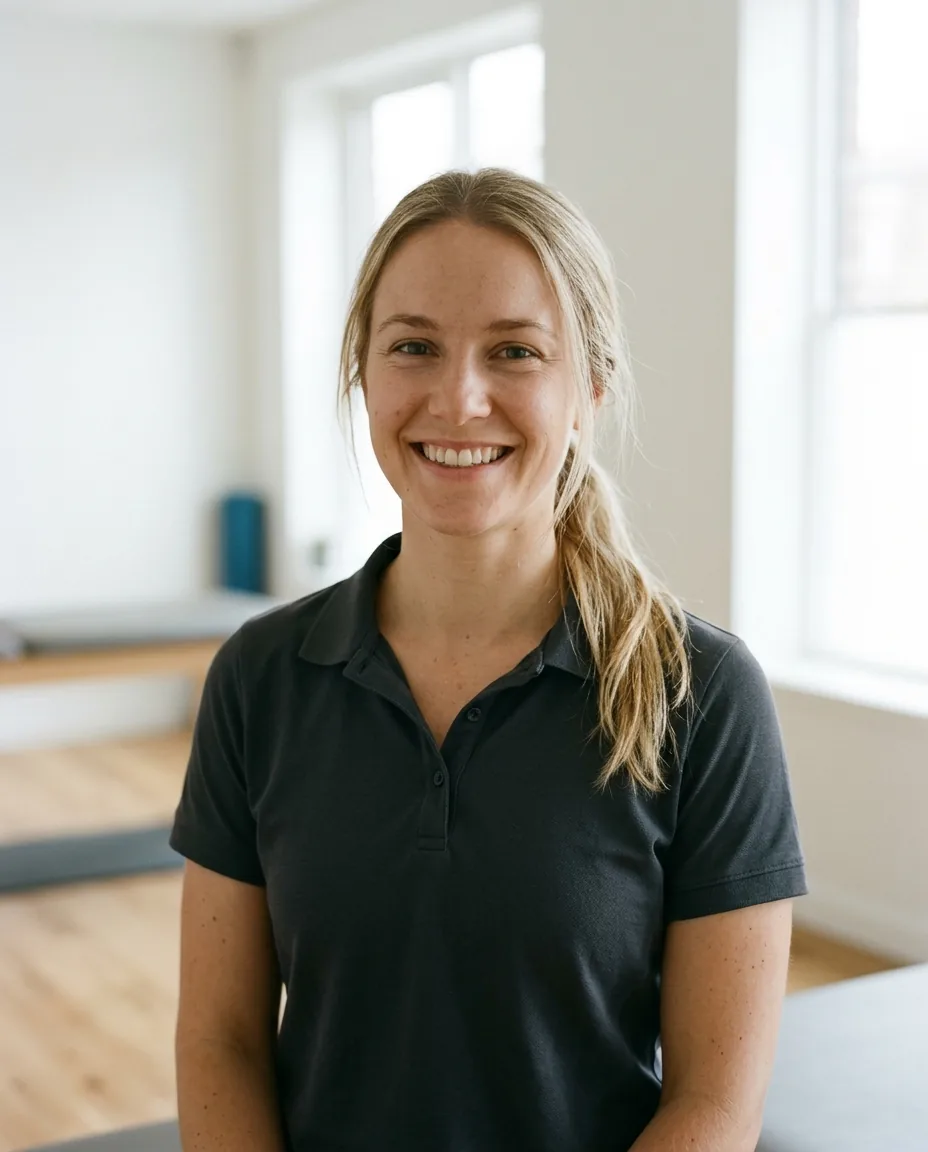
“I teach our Pilates classes, and I like building programs around life with small kids.”
Back to running after a babyAb separation after birthLower back pain
Book onlineThere's no single date, and the weeks are a guide. Both Australian guides point to at least 3 months, with a check of your tummy and pelvic floor first. We start from where you are.
No. {promise:pelvic-internal-optional}It's always your choice. We'll explain why it might help. If you'd rather not, we'll assess you another way. You can change your mind at any point, even partway through. Claire is the physio who does them.
Leaking is common after a baby, and there's help for it. It means your pelvic floor needs more time, so we ease back on running and work on that first.
Until around 12 weeks, you're still healing inside. Walking, cycling and low-impact aerobics are OK before then. If you feel pain, discomfort or a pull on your scar, stop and give it a few more weeks.
Have your 6-week check with your doctor first. After that, you can book with us without a referral, and we can send your GP a summary of what we find, if you'd like.
Call and ask. If we're not the right fit for your problem, we'll tell you.