A dark, quiet room
Lie down somewhere dark and quiet, or sleep. For a mild headache that doesn't come often, that's often all it needs.

 Reviewed by Ellie Brandt, Principal physiotherapist, September 2026
Headaches have many causes. Some come from the neck, and a physio can assess those. Others, like migraine, are a job for your doctor.
We'll check for the signs that need a doctor first, and tell you which kind we think yours is.
Includes tension-type headache and cervicogenic headache (a headache that comes from the neck).
Usually
A dull, tight band on both sides of your head, often from stress.
One of the most common kinds. It usually feels dull or tight, on both sides of your head, and can last from half an hour to a week. Posture, stress and too much screen time can all set headaches off. So can too much or too little sleep, and relaxing after a stressful stretch.
Sometimes
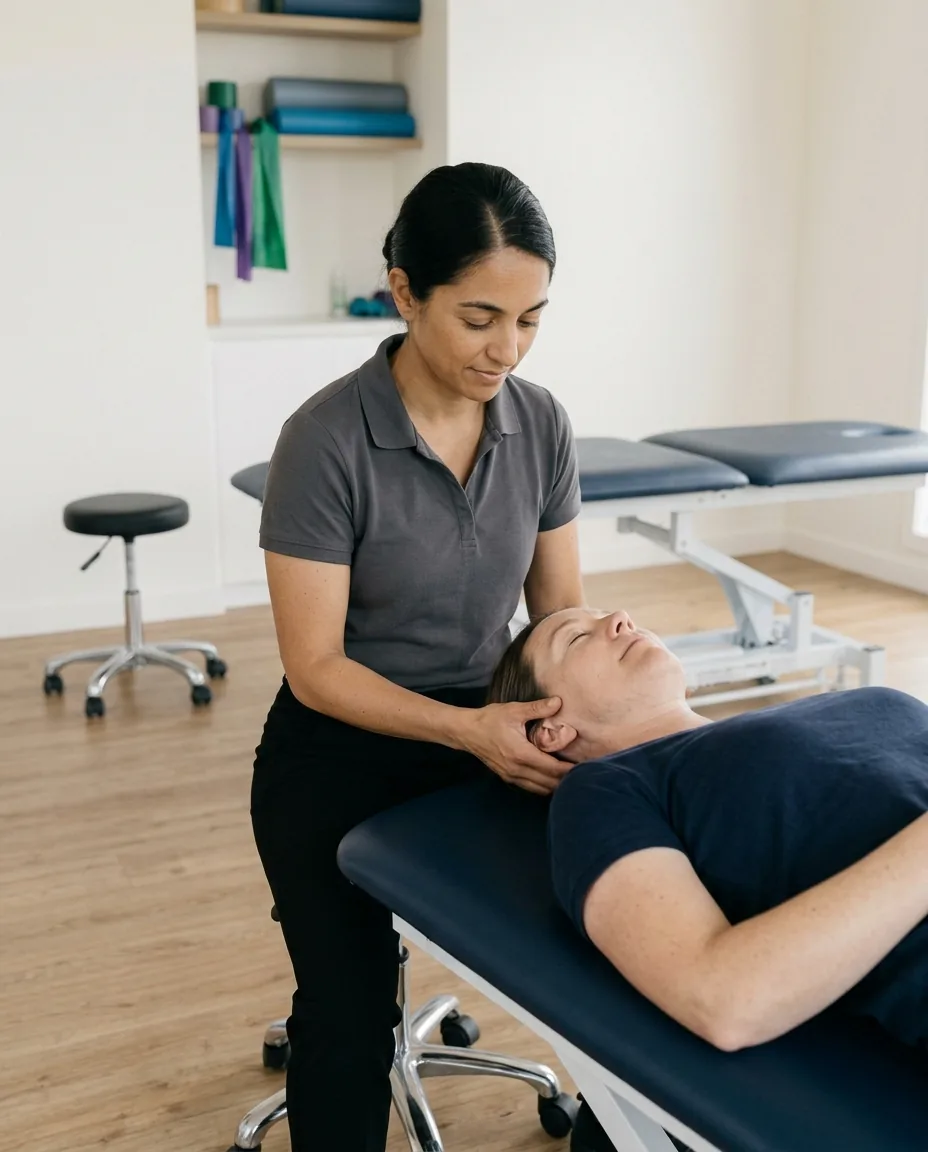
A headache that starts in the neck. Neck pain often comes with it.
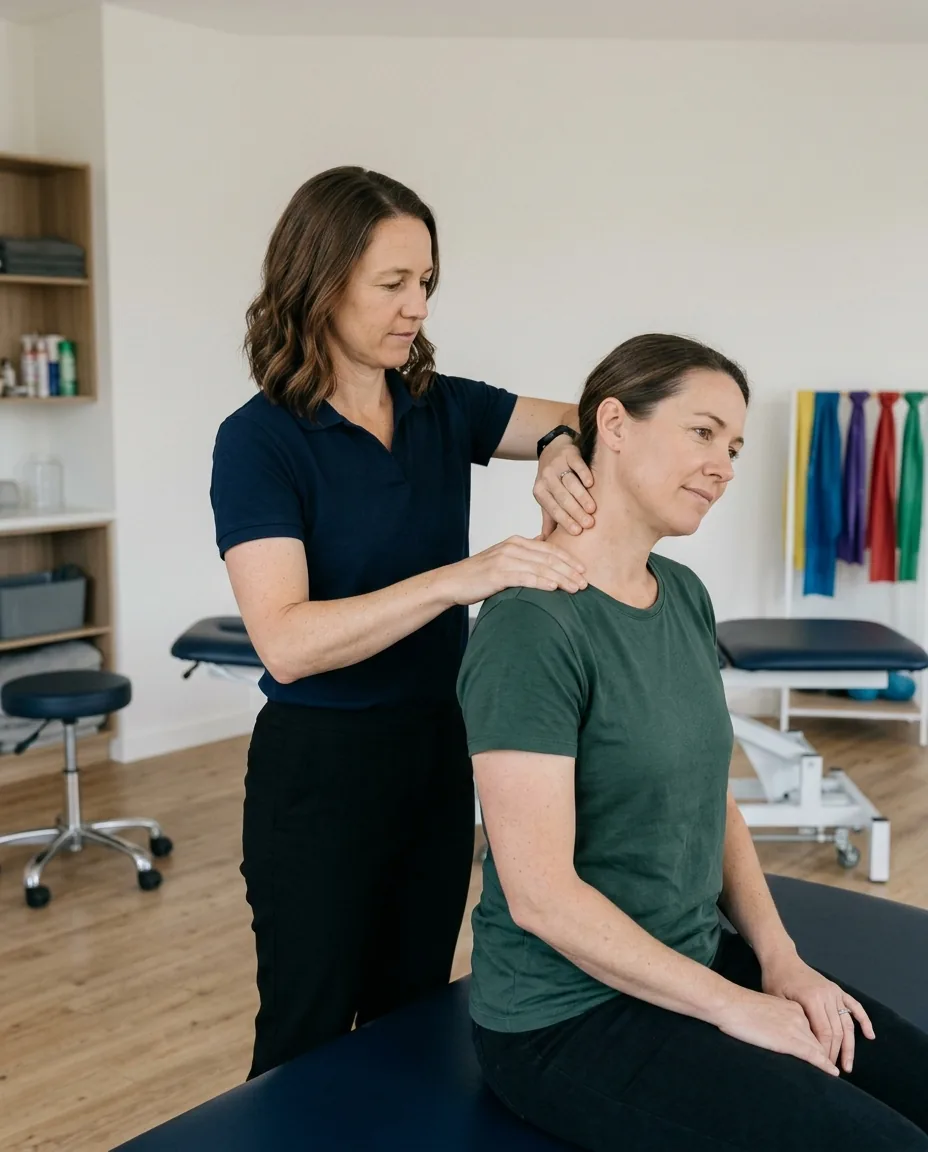
Neck pain can cause headaches. When a headache comes from the neck itself, it's called a cervicogenic headache.
Sometimes
There are many kinds of headache. Your doctor can tell them apart.
There are many types of headache, and migraine is one of them. Working out which one you have is sometimes a job for your doctor, and your doctor may refer you to a neurologist.
Rarely
A headache can mean a serious illness. The signs are below.
Sometimes a headache is a sign of a serious illness. The signs that mean a doctor or an ambulance, not a physio, are listed below.
We start by working out what kind of headache it is, as far as a physio can.
Not every headache is ours. We'll say so if yours isn't.
Your headache pattern: when it starts, where it sits, what sets it off.
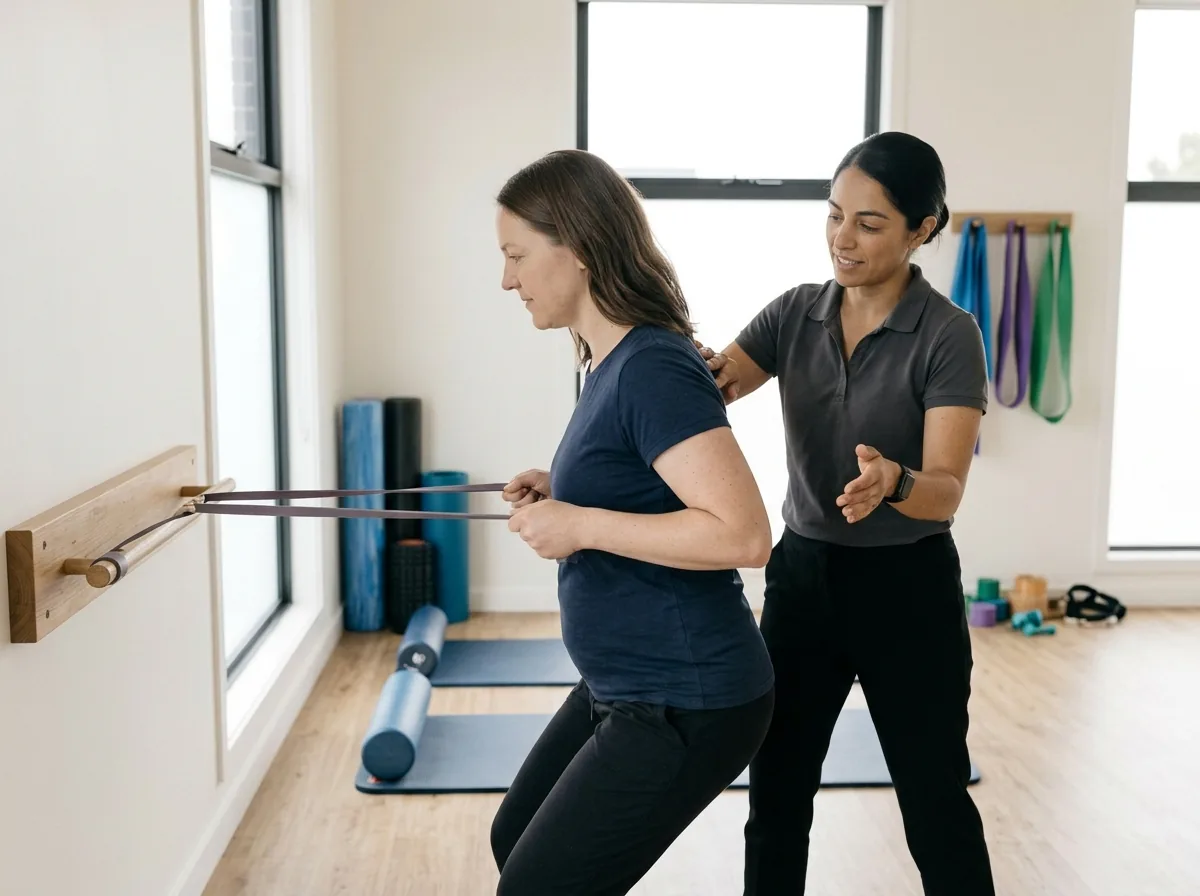
How your neck moves, and the strength around your shoulders. The signs that mean a doctor. We'll explain what the checks tell us.
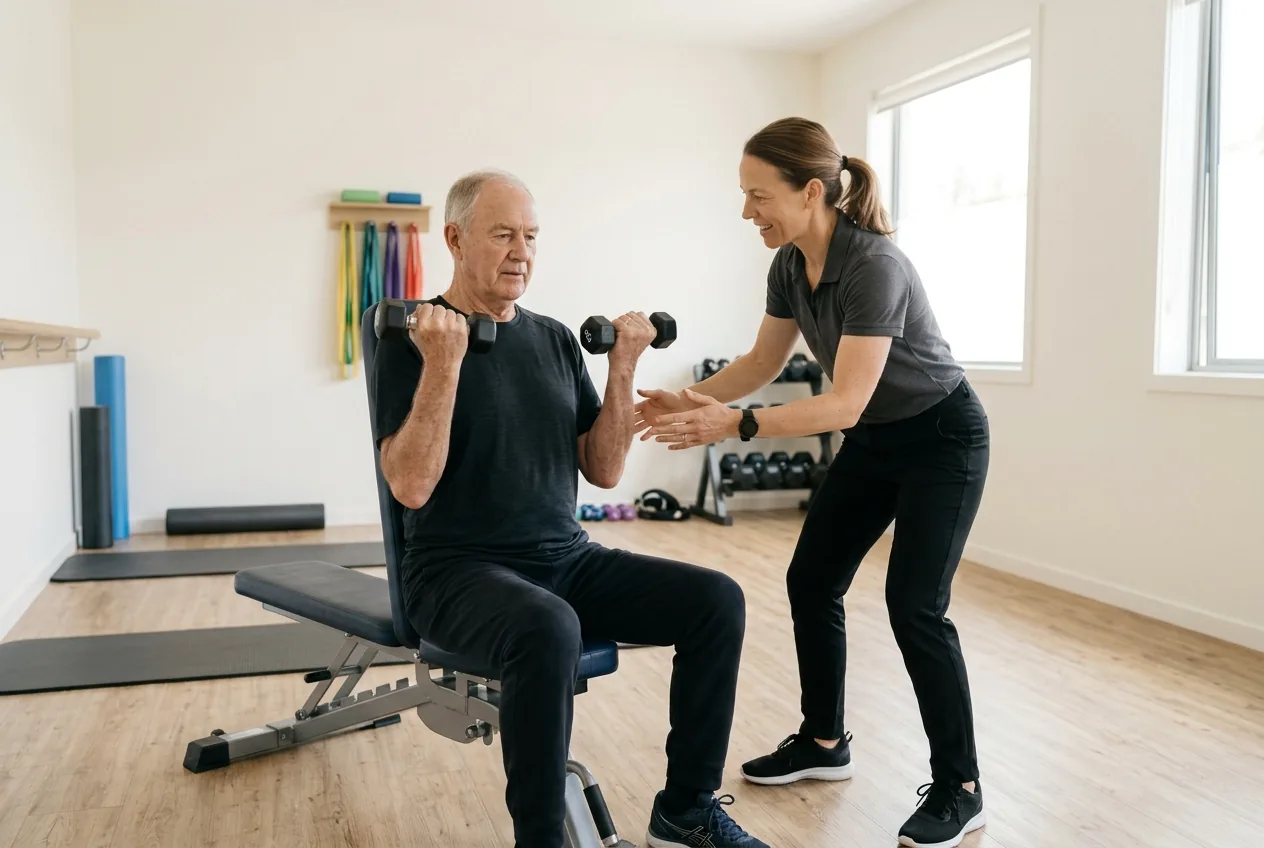
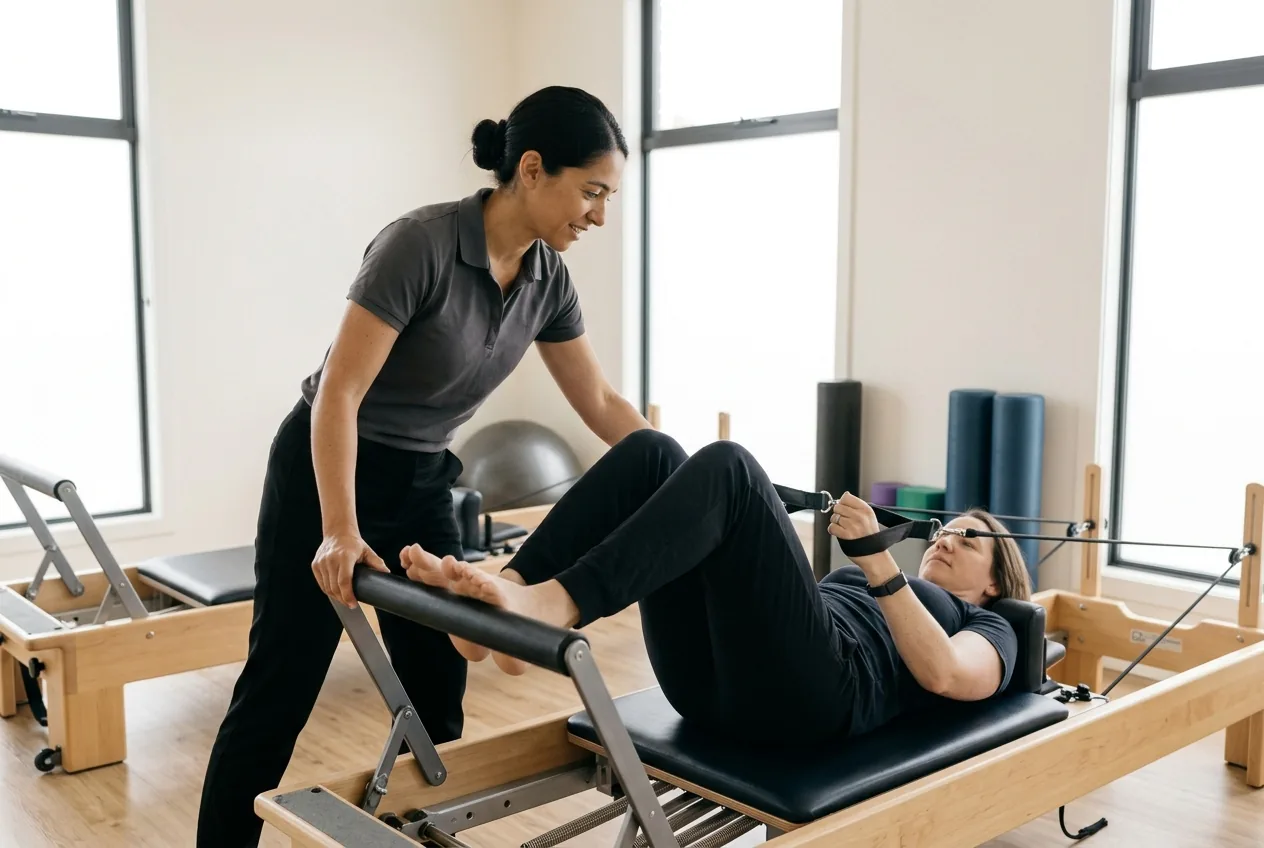
For headaches that come from the neck, strengthening exercises for the neck, shoulders and shoulder blades may help.
The research is still uncertain. Stretching on its own may not. You'll have yours written down or in an app, with what each one's for.
Posture, stress and screen time can all set headaches off.
We look at your desk and the breaks you take, and keep the changes to ones you'll actually keep.
We'll say so and send you back to your GP, who can work out the type and the treatment.
If your neck is sore as well, that part is ours.
Source: healthdirect, "Headaches", last reviewed May 2025
Call 000 or go to your nearest emergency department if you have a sudden, severe headache, or a headache with any of these:
See your GP as soon as possible if you have a headache that:
Also see your GP as soon as possible if you're pregnant and have a headache that starts suddenly or is different from your past headaches, or if you have a new type of headache and have cancer, a weakened immune system or a family history of glaucoma.
See your GP if headaches happen often and stop you doing your usual things, if you take pain medicine for headaches often during a week, or if headaches you've already been diagnosed with change or get more severe.
For a mild headache that doesn't come often, these can be enough:
Lie down somewhere dark and quiet, or sleep. For a mild headache that doesn't come often, that's often all it needs.
A cold or a warm cloth on the back of your neck, or on your forehead. Try each and keep the one that helps.
A walk outside in fresh air, or some exercise. And a glass of water: not drinking enough is a common trigger.
When they come, how bad, what else you felt, what might have set them off. It helps your doctor find the pattern, and it helps us.
If they keep coming, or you want to know whether your neck is part of it, that's what an assessment is for. No GP referral needed for private physio. If they're frequent or changing, see your GP as well.
About 45 minutes, one-on-one the whole time.
Your headache pattern: when it starts, where it sits, what sets it off. What you've already tried, and what happened. Your headache diary, if you keep one.
How your neck turns, bends and tilts, and where it catches. The muscles between your neck and your shoulders, and the strength around your shoulder blades.
The signs above that would mean a doctor instead.
We'll explain each test, and ask before we touch.
Which kind of headache we think it is, and whether your neck is part of it.
If it looks like migraine or another type, or you need a GP first, we'll say so.
You leave with your exercises written down or in an app, and what to change at your desk.
We'll tell you roughly how many visits we expect, and why. If that changes, we'll tell you.
No packages to buy. You book one visit at a time.
Physiotherapist
Mon, Wed, Thu, Fri“I spent four years helping office and warehouse teams with back pain before Kestrel.”
Lower back painNeck painShoulder pain
Book with TomIt depends on the kind. Headaches that come from the neck are something we assess and treat with exercise; the research is still uncertain about how much it helps. Nothing makes headaches go away for good, and anyone who promises that is promising too much. We'll tell you which kind we think yours is, and what we can and can't do for it.
We don't treat migraine itself. If your headaches look like migraine, we'll say so and send you back to your GP, who can work out the type and the treatment. If your neck is sore as well, that's something we can assess.
Neck pain can cause headaches. When a headache comes from the neck itself, it's called a cervicogenic headache, and it's the kind a physio can assess. Our neck pain page covers the neck side of it.
In most cases, no tests are needed to diagnose a headache. If we find signs that mean a doctor should look further, we'll tell you why and send you to your GP, who decides on any tests.
That's what the assessment is for. We'll ask about your headache pattern, check how your neck moves, and tell you what we think. If it doesn't look like it's coming from your neck, we'll say so.
If headaches are frequent and stopping you doing your usual things, see your GP as well as us. For headaches that come from the neck and have lasted, strengthening exercises may help, though the research is uncertain. We'll explain what we think is keeping them going, and what we don't know yet.
Pick a time online, or call and we'll help you choose the right appointment.