After an injury, ice it
Ice for up to 20 minutes every 2 to 3 hours, with weight off it for the first days. No better after a few days? See your doctor.

 Reviewed by Ellie Brandt, Principal physiotherapist, September 2026
Most knee pain isn't serious. It usually comes from one of a few places: around the kneecap, the joint itself, or the ligaments and tendons around it.
We'll tell you which we think it is, in plain English. If it needs a scan or a doctor first, we'll say so.
Includes runner's knee (patellofemoral pain), knee arthritis, and ligament and tendon injuries.
Pain around or behind the kneecap, worse on the stairs.
Around or behind the kneecap, and often worse on stairs, squatting, running or jumping. This is called patellofemoral pain. It's common, from teenagers to older adults. Bursitis and arthritis can cause pain at the front of the knee too.
Usually a twist, a knock or a sudden turn. Sometimes arthritis.
Usually from an injury, like a twist, a knock or a sudden change of direction. Arthritis can cause it too.
Often arthritis or a Baker's cyst. A red calf needs a doctor.
Often from arthritis, or a cyst behind the knee called a Baker's cyst. If your calf is also sore, red or swollen, see a doctor first (below).
Each kind of knee pain is treated differently. We start there.
So that's where we start.
First, we work out which of these it is.
Which one it is changes the plan.
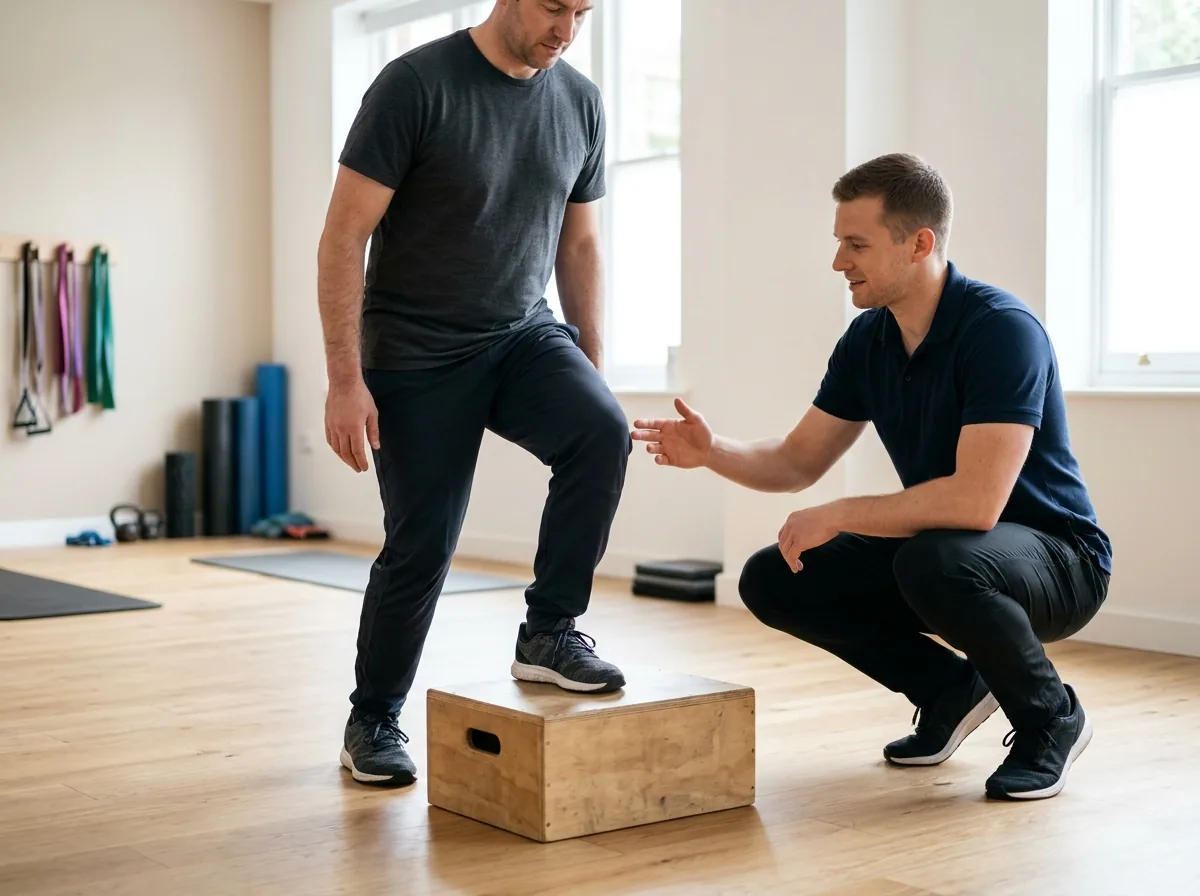
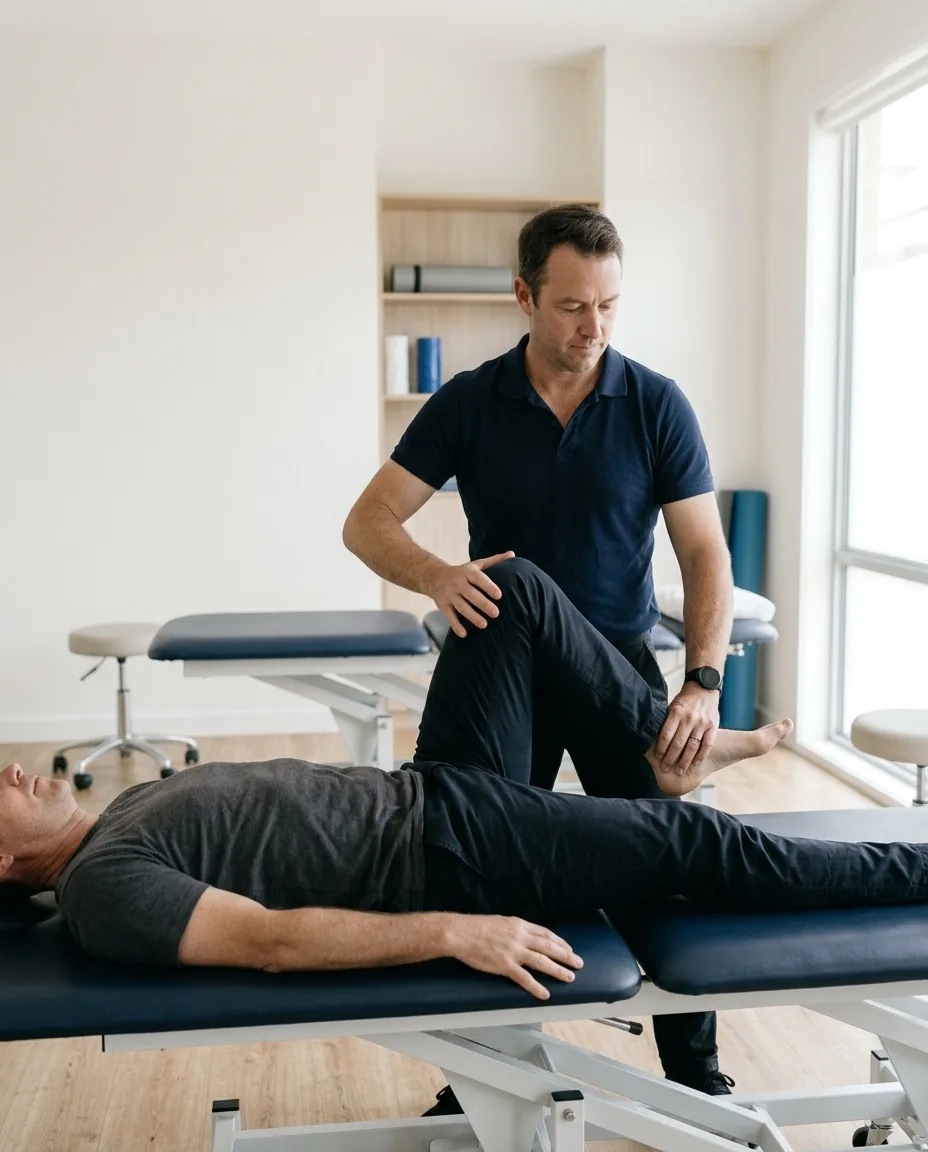
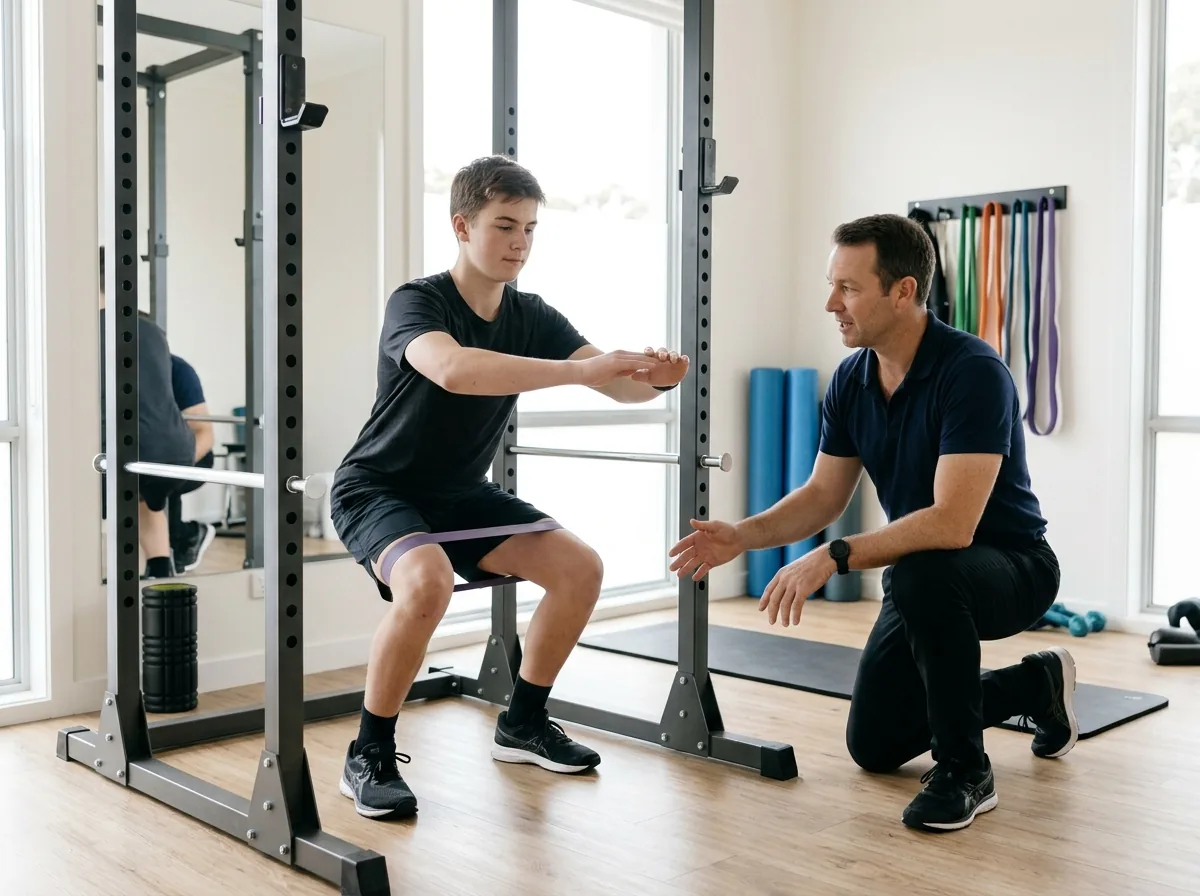
We watch you squat, step and balance if it's safe, and compare strength on both sides.
For a twist or a knock, we check how stable the knee is. We'll explain what the checks tell us.
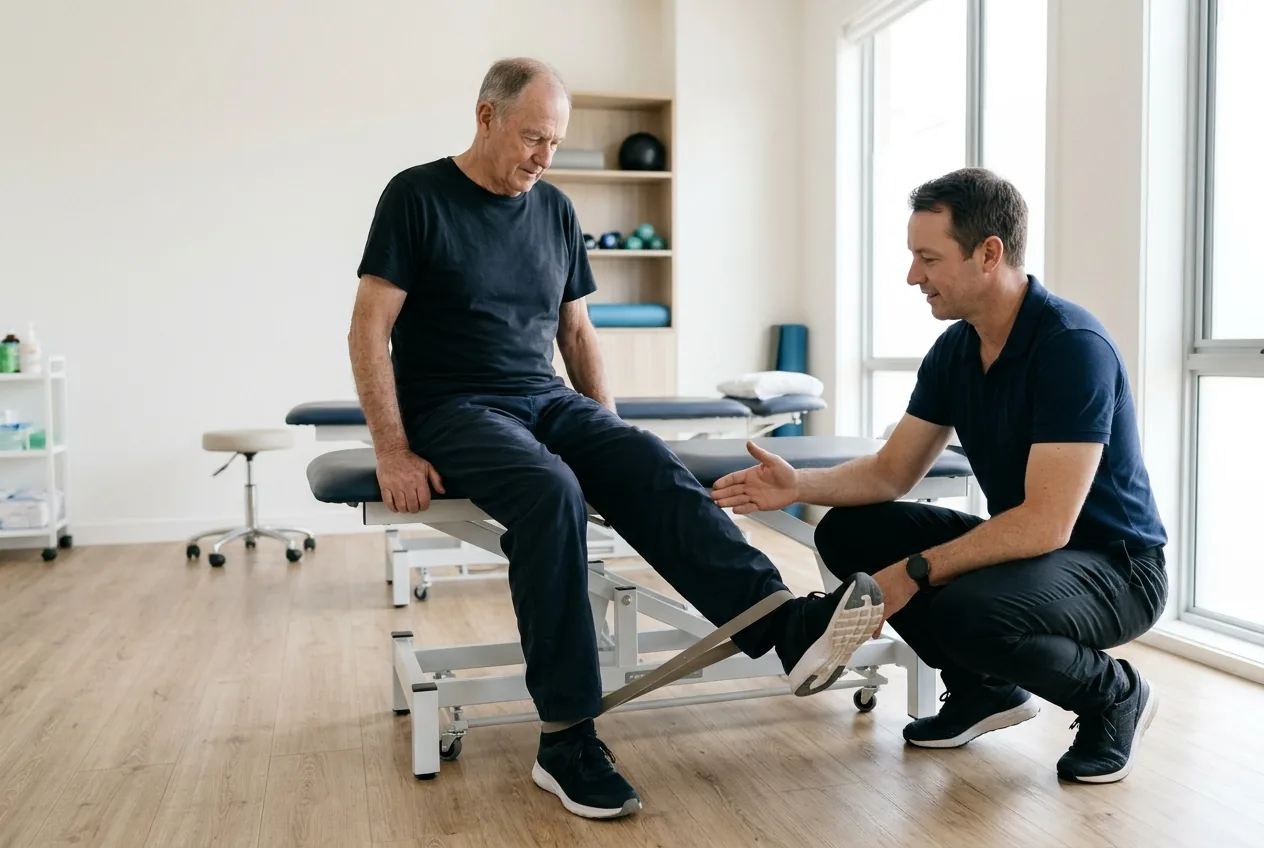
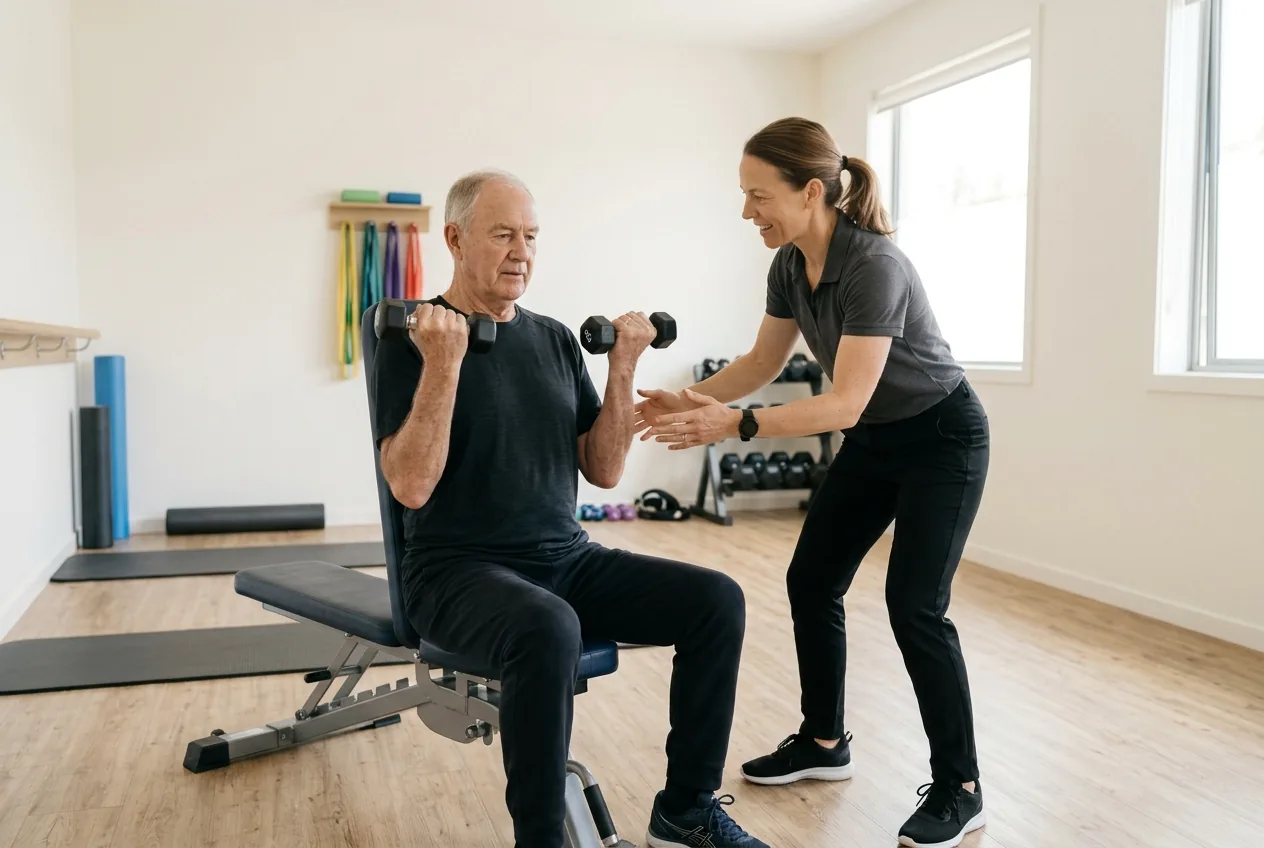
Exercises for the hips and knees together are the recommended starting point.
Foot orthoses can help some people alongside them. If running or squatting is what hurts, we look at how you do it, and how much.
Exercise may ease pain a little and help you move better.
The research can't yet say how much difference you'll notice. So we measure it: strength, how far the knee bends, and the stairs or runs that matter to you.
We keep you as active as the knee allows, and build the load back up in steps.
Most of that work happens between visits. You'll have your exercises written down or in an app, with what each one's for.
Source: healthdirect, "Knee pain", last reviewed February 2024; healthdirect, "Deep vein thrombosis", last reviewed May 2025
Go to an emergency department if:
See your doctor urgently if you have a fever, new knee pain, and your knee is red and swollen.
See a doctor straight away if your calf or thigh is sore, red or swollen. It can be a sign of a blood clot (DVT). Call 000 if you also have chest pain or trouble breathing.
See your GP if you can't move your knee, can't put any weight on it, it locks or gives way, or it's very painful.
Most knee pain settles. While yours does:
Ice for up to 20 minutes every 2 to 3 hours, with weight off it for the first days. No better after a few days? See your doctor.
Long stretches of complete rest are rarely the plan for this kind of injury. Cut back the thing that hurts, and keep the rest.
Always warm up before you exercise and cool down after. Strong muscles around the knee can help prevent knee pain coming back.
Strengthening exercises and exercise in water can help. Being overweight puts more pressure on the knees, and even a small loss can lessen the pain.
If it's not easing, or you want to know which part of the knee it is and what to do about it, that's what an assessment is for. No GP referral needed for private physio. If you can't put weight on it, or it locks or gives way, see your GP first.
About 45 minutes, one-on-one the whole time.
How it started. What sets it off: the stairs, the squat, the run. What you've already tried, and what happened. If it came on with sport or running, bring the shoes you train in.
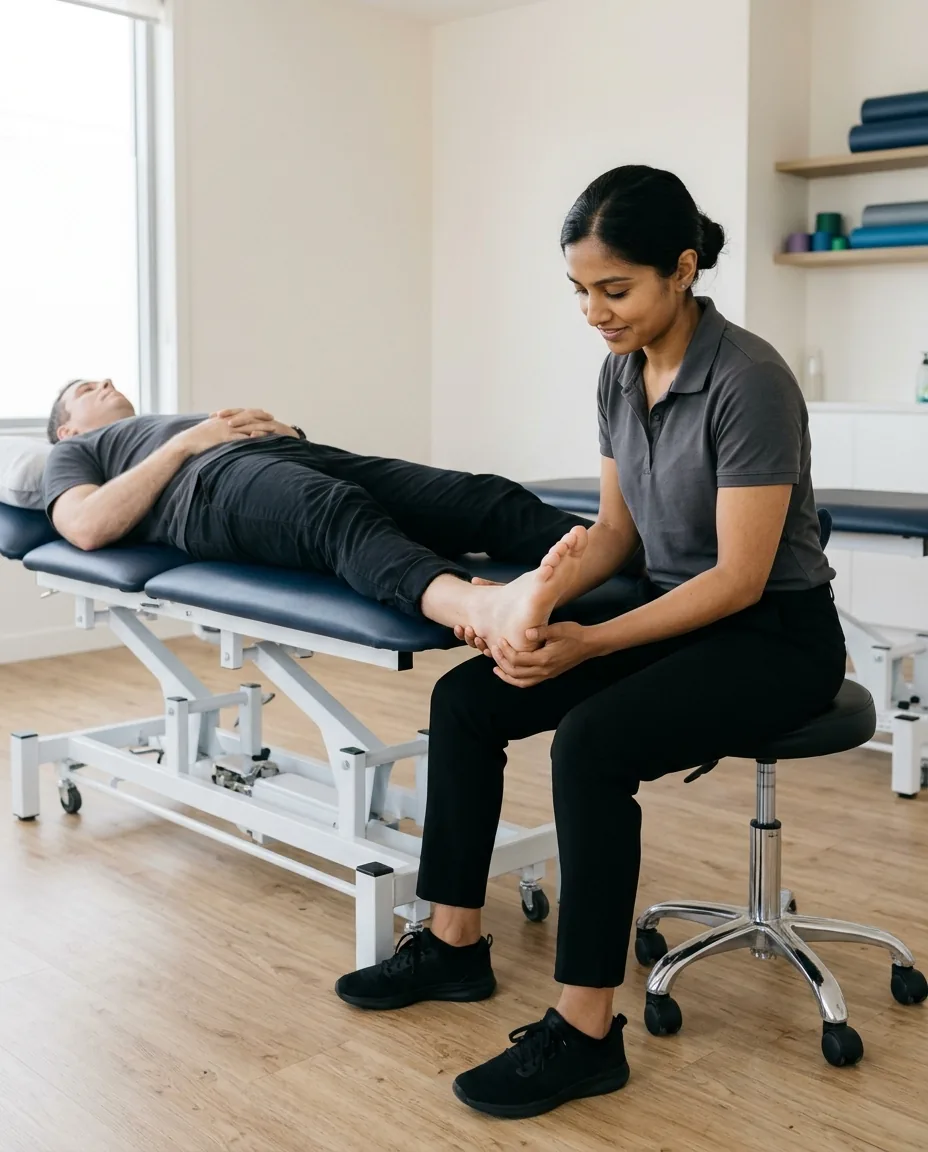
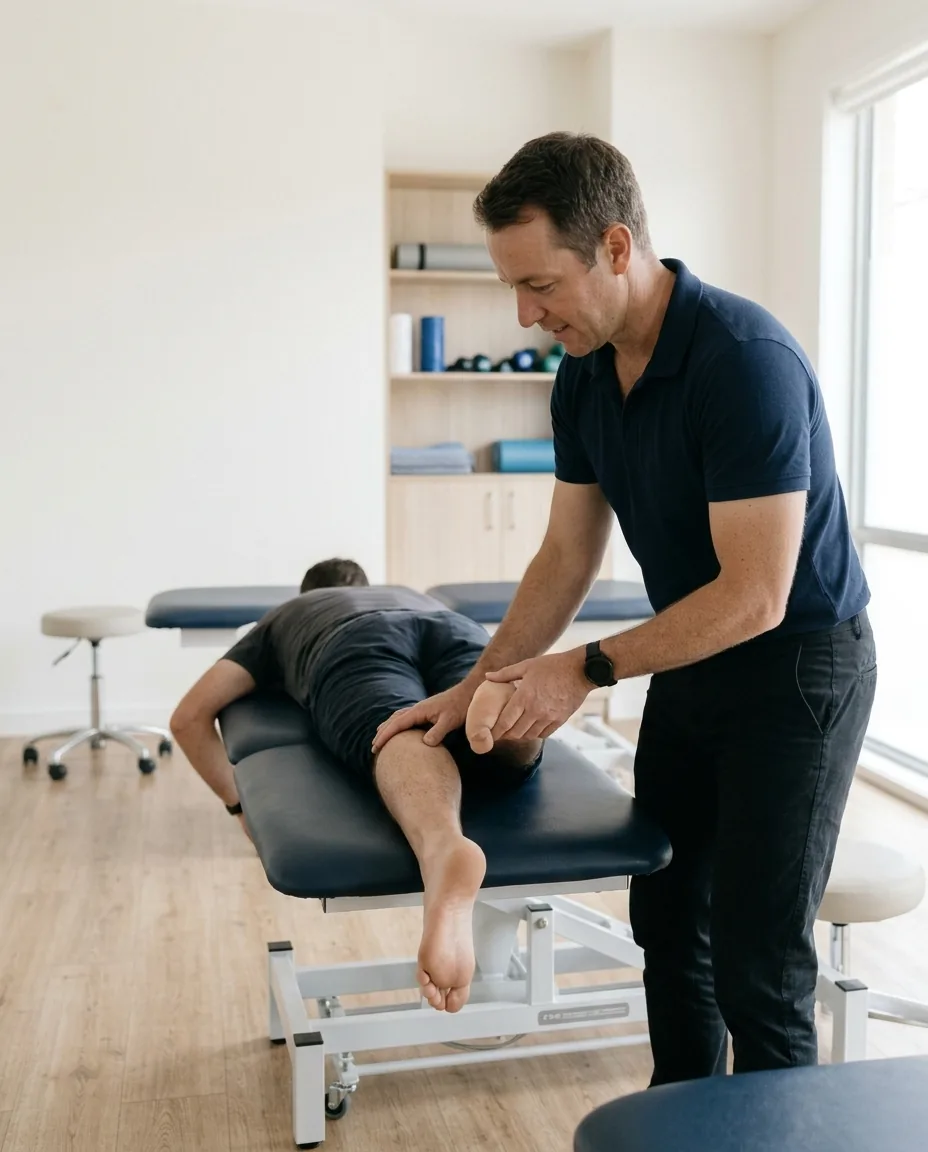
We watch you squat, step and balance if it's safe, and compare strength on both sides. How far the knee bends and straightens, and where it catches.
For a twist or a knock, how stable the knee is.
We'll explain each test, and ask before we touch.
Which part of the knee we think it is, in words that make sense.
If you need a scan or a GP first, we'll say so.
You leave with your exercises written down or in an app, and what to keep, change and park for now.
We write down the measures too, so you can see whether the plan's working.
No packages to buy. You book one visit at a time.
MACP, APA Titled Sports and Exercise Physiotherapist
Mon–Thu“I played netball for fifteen years, so I know how much getting back on court matters.”
Knee painACL injurySprained ankle
Book with EllieIt depends on which part of the knee it is. For pain around the kneecap, exercises for the hips and knees are the recommended starting point. For knee arthritis, exercise may ease pain a little and help you move better, though the research can't yet say how much you'll notice. We'll tell you which we think yours is, and what the evidence says for it.
No. We'll assess it first. If we think a scan would change the plan, we'll tell you why and send you to your GP.
Squatting loads the joint behind your kneecap, so pain around the kneecap often shows up there first. We'll watch you squat, work out what's driving it, and change how you load it while it settles. Our article on knee pain when squatting goes into it.
Sometimes. Go to an emergency department if it's badly swollen or has changed shape, if it's red and hot and you have a fever, or if it started with a major injury. If it puffs up a bit after sport or a long walk and then settles, book an assessment and we'll look at why.
Usually not completely. Long stretches of complete rest are rarely the plan for this kind of injury. We'll work out what to keep, what to change and what to park for now.
For pain around the kneecap, the research is unsure whether braces or taping help. Exercise is the main treatment, and we'll tell you if a brace makes sense for you.
Pick a time online, or call and we'll help you choose the right appointment.