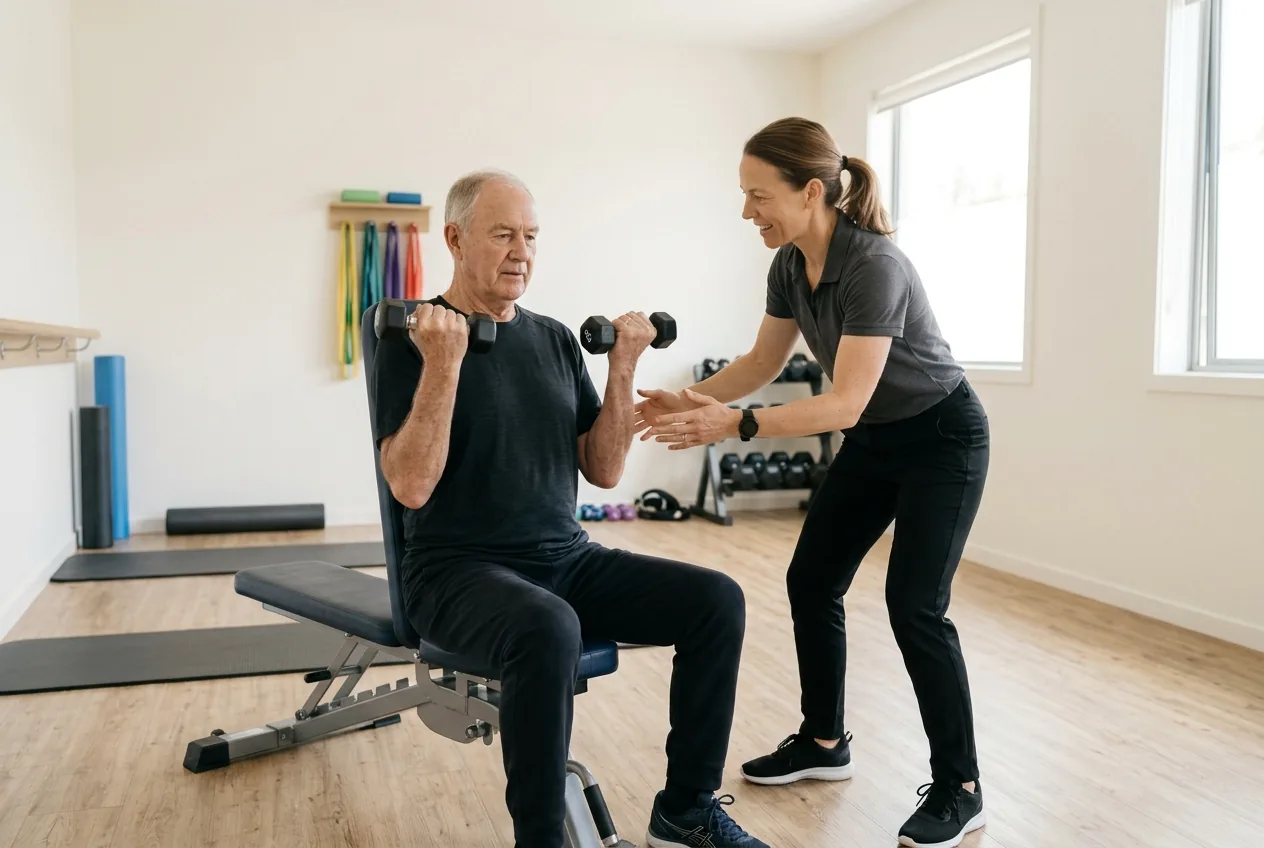
Keep it moving
Unless it started with an injury or accident, keep moving your neck naturally and gently. Don't do anything that causes pain.

 Reviewed by Ellie Brandt, Principal physiotherapist, September 2026
Neck pain is common. Most of it clears up by itself in a few weeks, and it's rarely a sign of something serious.
We'll check for the signs that need a doctor first. Then we tell you what we think is keeping yours going, and what to change at your desk.
Also called neck strain. Includes whiplash.
Usually
Long hours at a computer, a pillow that doesn't suit you, stress.
The common causes are everyday ones: long stretches at a computer without a break, the way you sit, and a pillow that doesn't suit you. Stress plays a part too. So can a strained muscle. None of them mean your neck is damaged.
Sometimes
A jolt like a car accident, or a headache that comes from the neck.
Whiplash is an injury to the soft tissues of your neck. It happens when your head moves suddenly one way and then quickly back, like in a car accident. After an accident, see a doctor first. Neck pain can also bring on headaches. If the headache is the main problem, our headaches page covers it.
Rarely
Fewer than 2 in 100 cases are serious. The signs are below.
Neck pain is rarely a sign of something serious. The chance it's caused by a serious condition is probably fewer than 2 in 100. The signs to watch for are listed below.
Treatment from a physio may help neck pain settle more quickly.
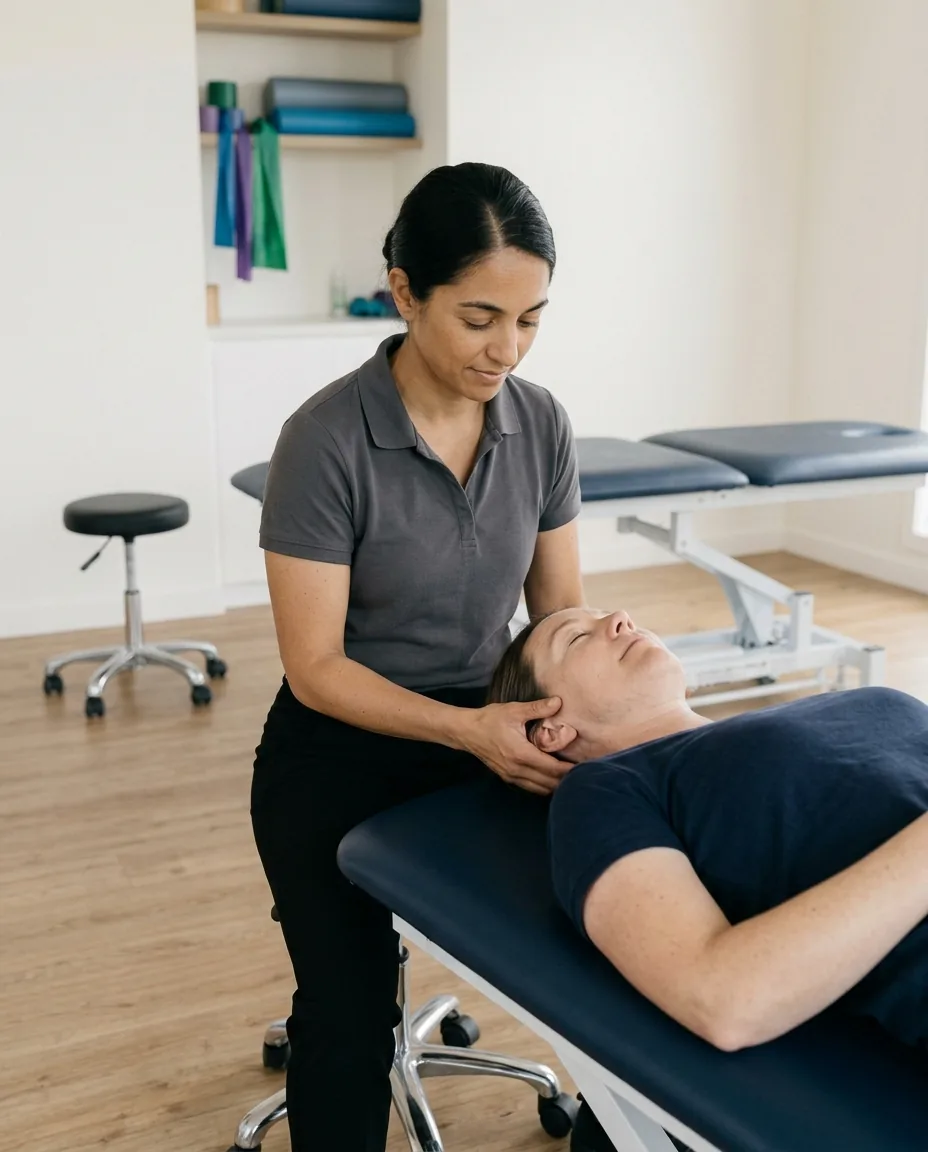
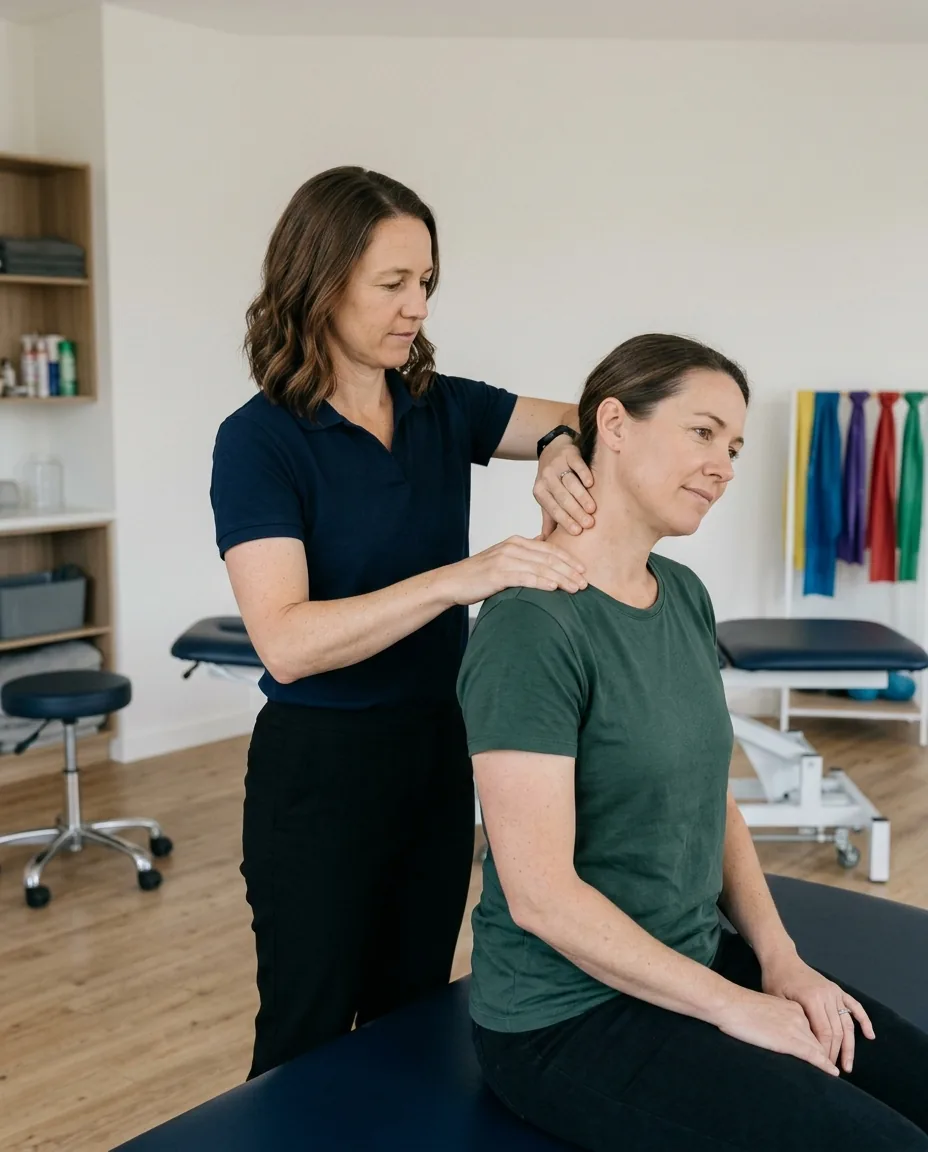
Hands-on treatment such as massage can give short-term relief. We'll say so when we use it, and we won't build your plan on it.
How your neck turns, bends and tilts, and where it catches.
The strength around your shoulders and shoulder blades. The signs that would mean a doctor. We'll explain what the checks tell us. Most people with neck pain don't need a scan.
The research hasn't found one neck exercise that beats the rest.
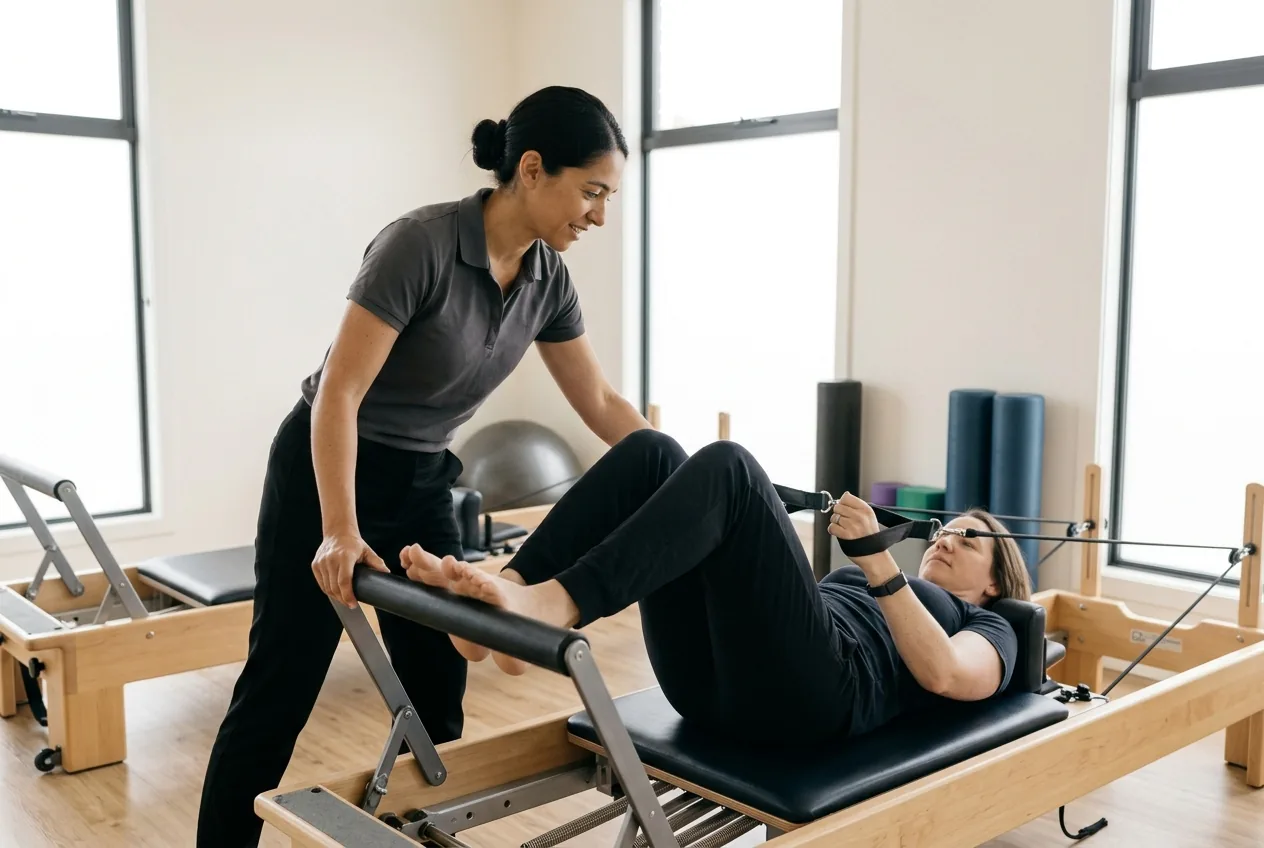
So we choose the ones that fit you, not a standard sheet. For neck pain that's lasted, strengthening exercises for the neck, shoulders and shoulder blades may help. The research is still uncertain. Stretching on its own may not. You'll have yours written down or in an app, with what each one's for.
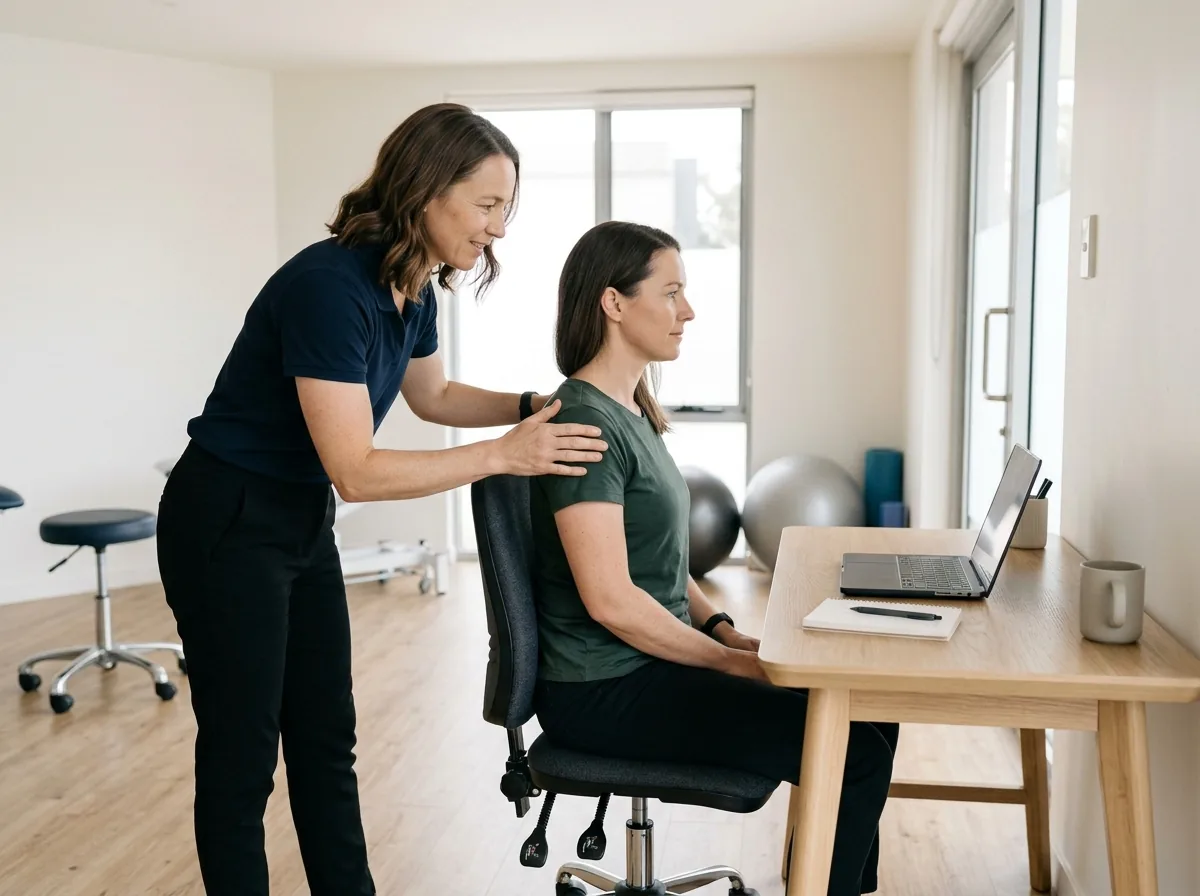
Screen height, breaks, how long you stay in one position.
Small changes first. The ones you'll actually keep.
Physio is usually built around exercise.
We'll show you how to keep moving without making it worse. It usually improves within a few weeks to months, and can take longer.
Source: healthdirect, "Neck pain" and "Whiplash", both last reviewed March 2026
Call 000 and ask for an ambulance if you have sudden severe neck pain, neck pain after a serious accident, or neck pain with chest pain, shortness of breath or sweating.
After an accident, see a doctor as soon as possible, even if you feel fine at first. Some symptoms don't show straight away.
Get urgent care if your neck pain comes with:
See your GP if your neck pain is severe, getting worse, hasn't eased in a few weeks, is distressing you or is affecting your daily life.
Most neck pain settles on its own in a few weeks. While it does:
Unless it started with an injury or accident, keep moving your neck naturally and gently. Don't do anything that causes pain.
A heat pack or an ice pack, wrapped in a tea towel, may ease the stiffness and the pain. Use whichever feels better.
A pillow that keeps your head and neck in their natural position, not too high. A screen at eye level, and a break before the stiffness sets in.
Braces and collars aren't considered useful for neck pain. Wear one for a short time only, and only if a health professional has told you to.
If it's not easing, or you want to know what's going on and what to do about it, that's what an assessment is for. No GP referral needed for private physio.
About 45 minutes, one-on-one the whole time.
When it started. What sets it off: the screen, the drive, the pillow. What you've already tried, and what happened. What you want to get back to.
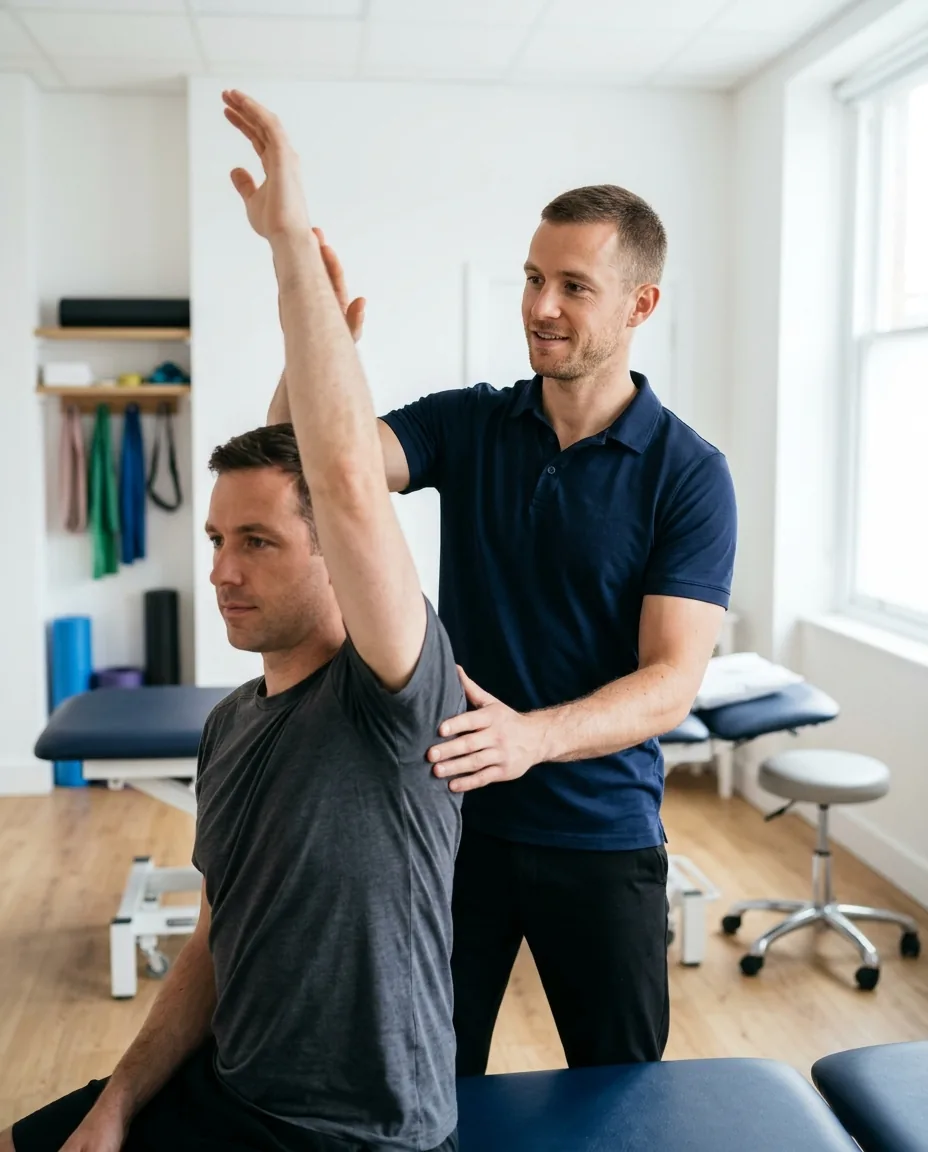
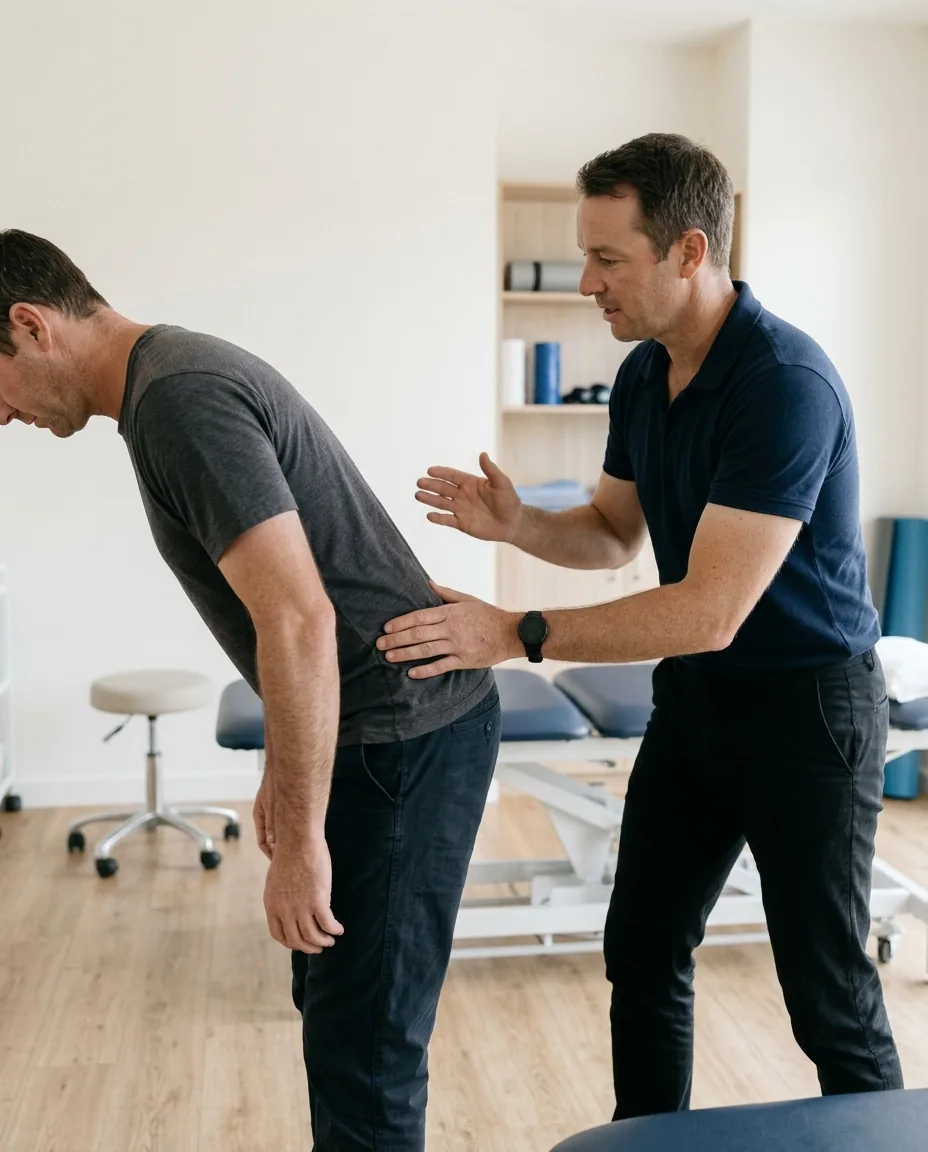
How your neck turns, bends and tilts, and where it catches. How you sit, and where your screen is.
The strength around your shoulders and shoulder blades, and your arms: feeling, strength and reflexes, for any sign a nerve is involved.
We'll explain each test, and ask before we touch.
What we think is going on, in words that make sense.
If you need a scan or a GP first, we'll say so.
You leave with your exercises written down or in an app, and what to change at your desk and in bed.
We'll tell you roughly how many visits we expect, and why. If that changes, we'll tell you.
No packages to buy. You book one visit at a time.

Physiotherapist
Mon, Wed, Thu, Fri“I spent four years helping office and warehouse teams with back pain before Kestrel.”
Lower back painNeck painShoulder pain
Book with TomMost neck pain settles on its own in a few weeks. Treatment from a physio may help it settle more quickly. What a visit gives you is a proper check of the signs that need a doctor, an explanation of what's going on, and a plan for your desk and your day. We'll tell you at the first visit how many more we think you need, which is often not many. If that changes, we'll tell you.
Most people with neck pain don't. If we find signs that mean a scan would change the plan, we'll tell you why and send you to your GP.
It can. Neck pain can bring on headaches, and a headache that starts in the neck is something we assess. If the headache is the main problem, our headaches page says how we check it and when it's a doctor's question. A headache with a stiff neck and a fever, or a sudden severe headache, is different: that needs emergency care, not us.
Keep moving it gently and naturally, and don't push into pain. A heat pack or an ice pack may ease the stiffness. Most of these settle within a few weeks. If yours is severe, getting worse or not easing, see your GP as well as us.
No. We use gentle mobilisation and exercise. The research finds mobilisation as effective as manipulation for neck pain, and high-speed neck manipulation carries a risk of serious side effects, so we don't do it.
If it hasn't eased in a few weeks, see your GP as well as us. For neck pain that's lasted, strengthening exercises may help, though the research is uncertain. We'll explain what we think is keeping it going, and what we don't know yet.
Pick a time online, or call and we'll help you choose the right appointment.