Keep moving, gently
Keep up your usual activities as well as you can. Walking and swimming can help with strength and flexibility. Leave running and heavy lifting until it settles.

 Reviewed by Ellie Brandt, Principal physiotherapist, September 2026
Sciatica is pain that starts in your back and runs down your leg. It can be very sore.
Most of the time it isn't caused by anything serious, and it settles over time.
We'll test the nerve, explain what we find, and keep you moving.
Also called sciatic nerve pain.
Usually
Pressure on the sciatic nerve, often from a bulging disc in the back.
Your sciatic nerve starts at the bottom of your spine. It runs through your buttock and down the back of your leg. Sciatica happens when that nerve is irritated, inflamed or under pressure. A common reason is a disc in the lower back bulging onto it. That's the "slipped disc" people talk about. Discs don't slip; they bulge.
Sometimes
The space the nerve runs through narrows. Pregnancy can play a part too.
Less often, the space the nerve runs through in the spine has narrowed. In pregnancy, changes in the muscles and ligaments can make sciatica more likely.
Rarely
Most sciatica isn't caused by anything serious. The signs are below.
Most of the time, sciatica isn't caused by anything serious. The signs that mean a doctor first are listed below.
Most of the time, sciatica goes away over time. Many people recover within a few months. Some still have symptoms after a year.
So the plan is to keep your life going while it settles.

We start by testing the nerve: the feeling, strength and reflexes in your legs.
That tells us whether anything needs a doctor first, and whether a scan would change the plan. Then we explain what we think is going on.
The advice for sciatica is to keep up your usual activities as well as you can.
Gentle, low-impact movement like walking or swimming can help with strength and flexibility. We'll set exercises at a level you can manage, written down or in an app, with what each one's for.
If sitting sets it off, we'll look at your chair and your desk.
We'll also be straight about the evidence.
The research can't yet say how much difference physio makes to sciatica itself. If it isn't settling, we'll tell you, and suggest you see your GP about other options.
Source: healthdirect, "Sciatica", last reviewed December 2024
Get medical care straight away if you have trouble controlling your bladder or bowels, or numbness around your genitals or bottom. If you can't see a doctor, go to an urgent care clinic or the emergency department.
Get urgent medical care if you have sudden lower back pain and:
See your GP too if:
Most sciatica settles over time. While it does:
Keep up your usual activities as well as you can. Walking and swimming can help with strength and flexibility. Leave running and heavy lifting until it settles.
Try not to sit or stand for long stretches. At a desk, adjust your seat height and use the back support. Get up and move before it tells you to.
Research found little or no difference for sciatica between resting in bed and staying active. So rest when you must, and keep your day going when you can.
If it's not settling, book an assessment. No GP referral needed for private physio. See your GP as well: that's the advice for sciatica.
About 45 minutes, one-on-one the whole time.
Where the pain goes. What sets it off. How you're sleeping and working. What you've already tried, and what happened.
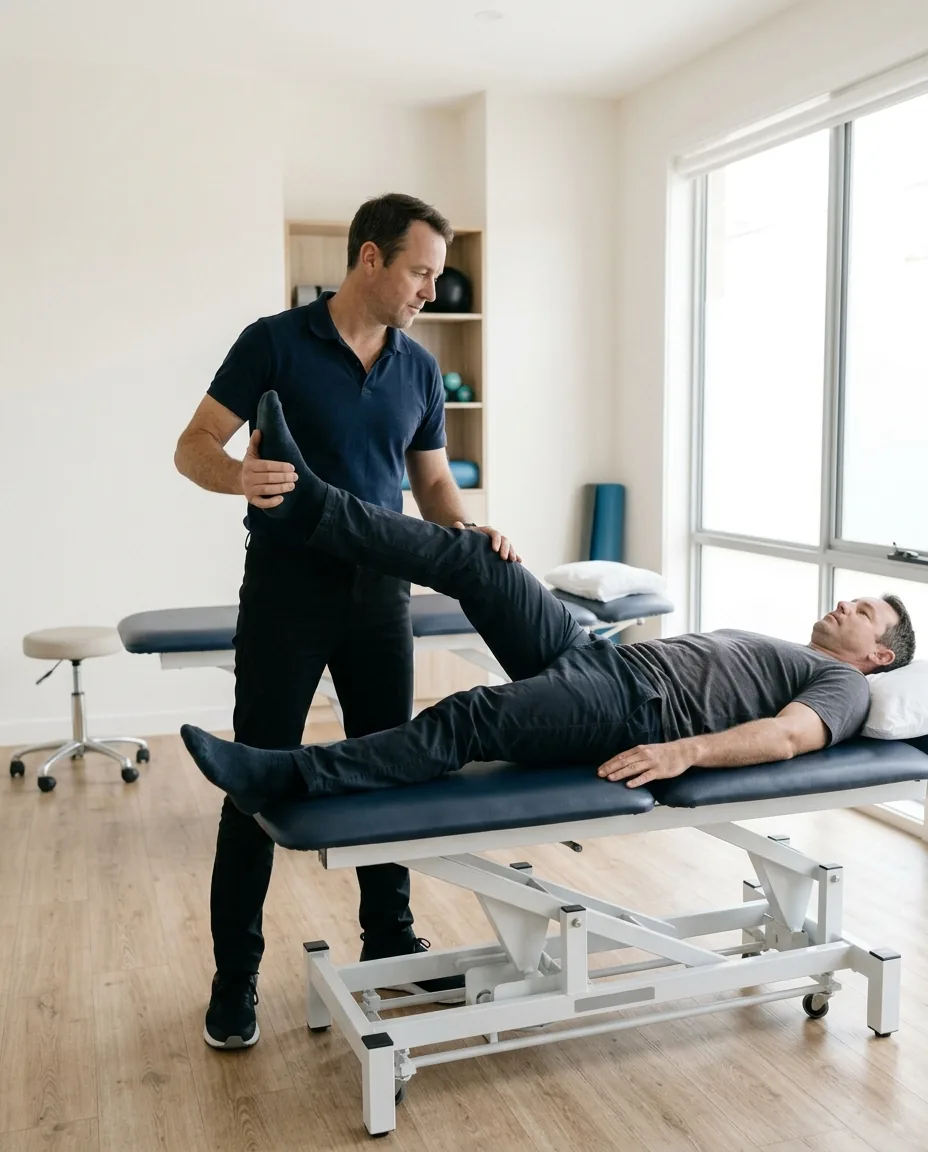
The nerve: feeling, strength and reflexes in both legs, and a leg-raise test on the table to see where the pain starts.
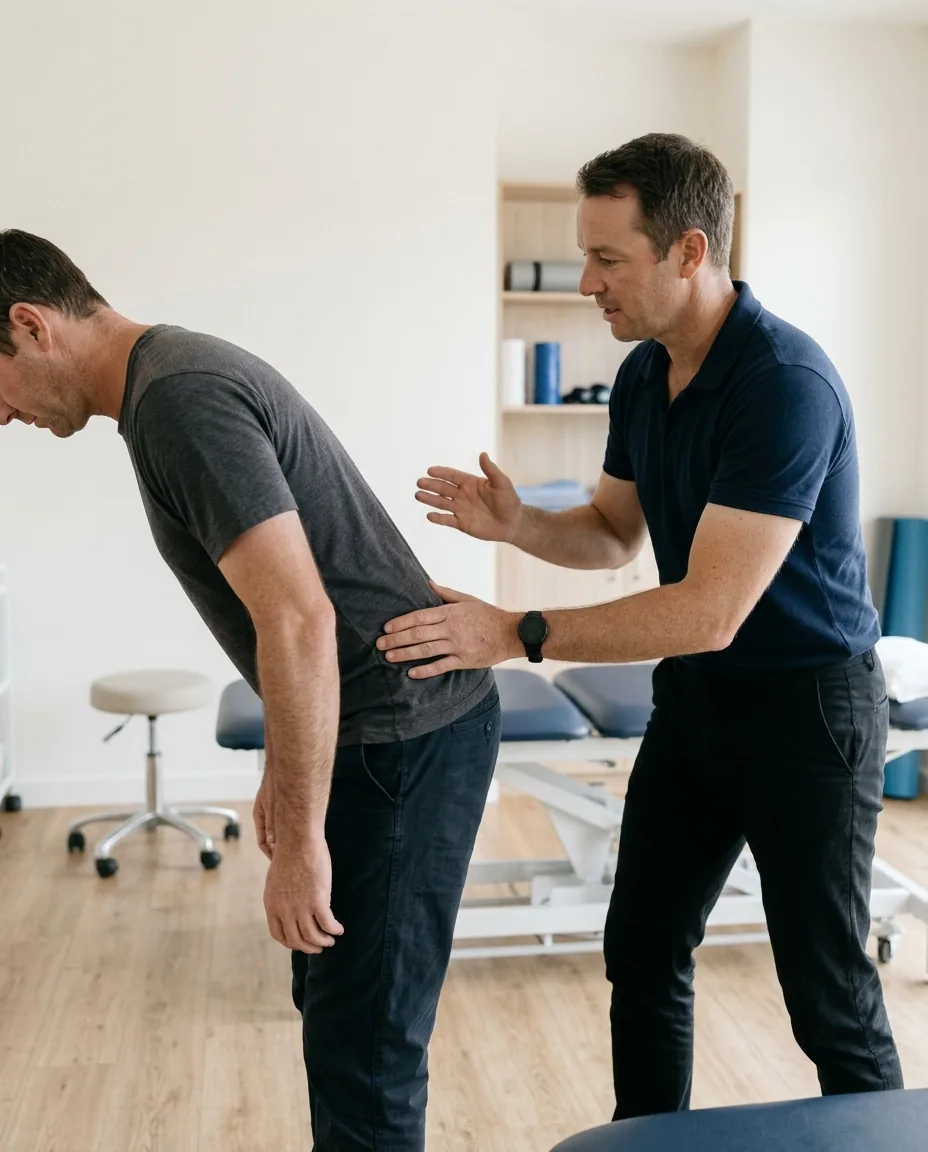
How you bend, sit and stand up.
We'll explain each test, and ask before we touch.
What we think is going on, in words that make sense.
If you need a scan or a GP first, we'll say so.
You leave knowing what to keep doing, what to ease off, and your exercises written down or in an app.
We'll tell you roughly how many visits we expect, and why. If that changes, we'll tell you.
No packages to buy. You book one visit at a time.

Physiotherapist
Mon, Wed, Thu, Fri“I spent four years helping office and warehouse teams with back pain before Kestrel.”
Lower back painNeck painShoulder pain
Book with TomPhysio can be part of the plan: testing the nerve, keeping you moving, and setting exercises at a level you can manage. The research can't yet say how much difference physio makes to sciatica itself, and we'll tell you if yours isn't settling.
Often a bulging disc is what's pressing on the nerve. Discs don't slip out of place; they bulge. Your doctor decides whether a scan is needed, based on your symptoms. We'll check for the signs that mean a scan could change the plan, and if we find them, we'll tell you why and send you to your GP.
Yes. healthdirect suggests seeing your doctor if you have symptoms of sciatica. Your GP can talk to you about medicines. We'll work on movement and getting through your day.
It varies. Many people recover within a few months, and some still have symptoms after a year. Sometimes it becomes long-term pain. We'll give you our own estimate at your first visit, and tell you if it isn't settling the way we'd expect.
The advice is to keep working and keep up your usual activities as well as you can. We'll help you find the level, and look at your chair and desk if sitting sets it off.
Surgery is an option for some people with severe symptoms, when medicines and physio haven't helped. If we think that might be you, we'll say so and send you to your GP.
Pick a time online, or call and we'll help you choose the right appointment.