Keep moving
Carry on with your day as much as you can. Keeping active is the most effective way to manage this kind of back pain.

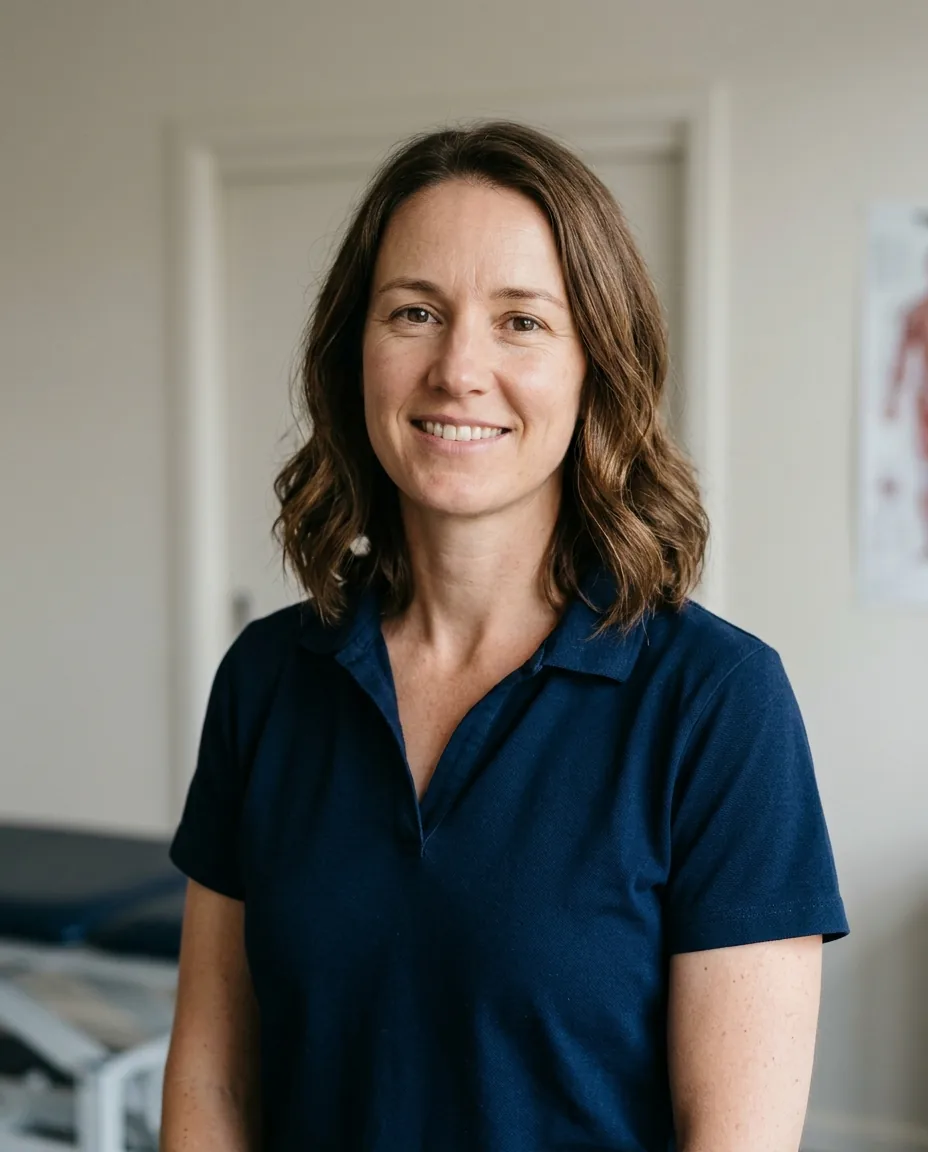 Reviewed by Ellie Brandt, Principal physiotherapist, September 2026
Lower back pain can hurt a lot without anything being seriously damaged. That's true for most people who have it.
We'll check for the signs that need a doctor first. Then we explain what we think is going on, in plain English.
Also called back strain or non-specific low back pain.
Usually
No single cause shows up, and a scan usually isn't needed.
In most cases no single cause shows up, and a scan usually isn't needed to work that out. That's called non-specific back pain. It can still be very sore. It's more likely after lifting something heavy you're not used to, like a toddler or a moving box. Stress and not much exercise make it more likely too.
Sometimes
Back pain that runs down the leg when the sciatic nerve is irritated.
Rarely
Fewer than 1 in 10 cases have a serious cause. The signs are below.
Staying active is the most effective way to manage this kind of back pain. Resting it can often make it worse.
So we start by working out what you can do, not just what hurts.
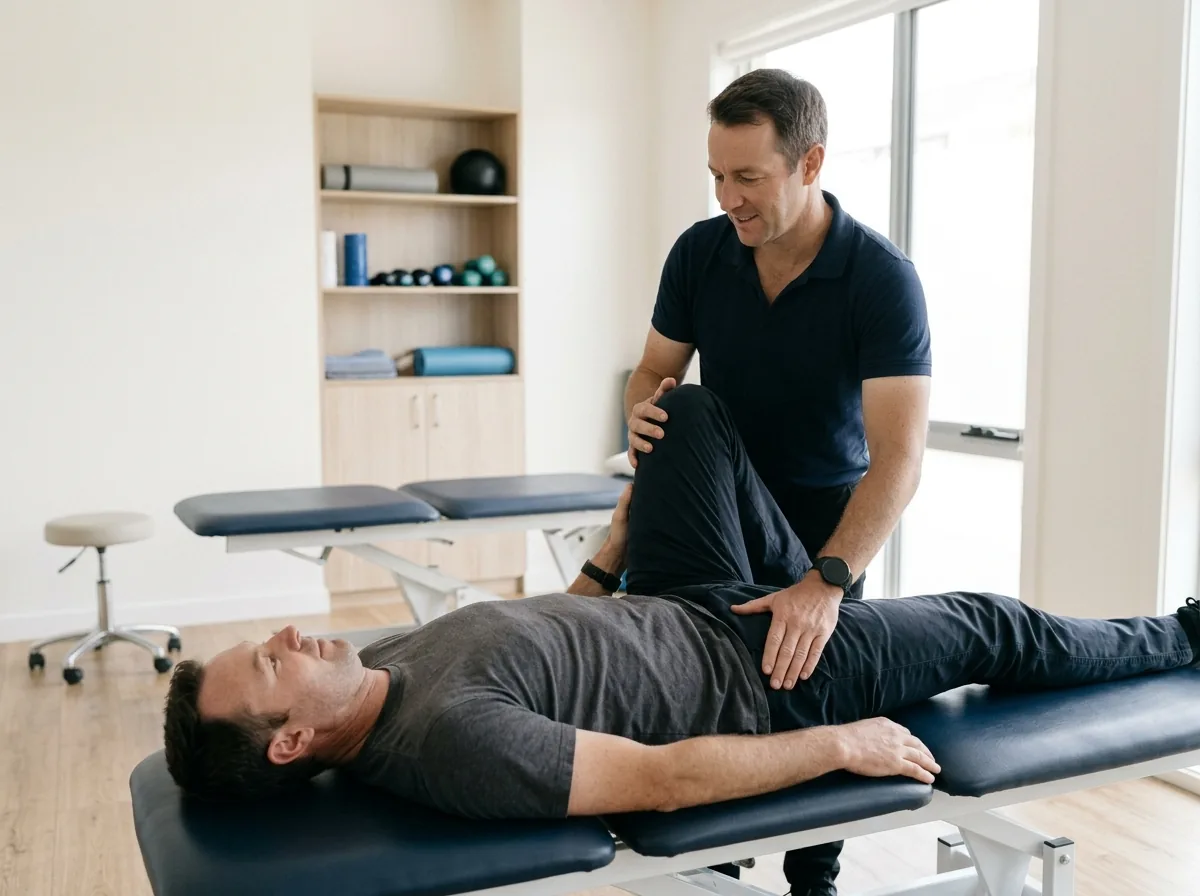
How you move, what brings the pain on, and the signs that would mean a doctor or a scan.
We'll explain what the checks tell us.
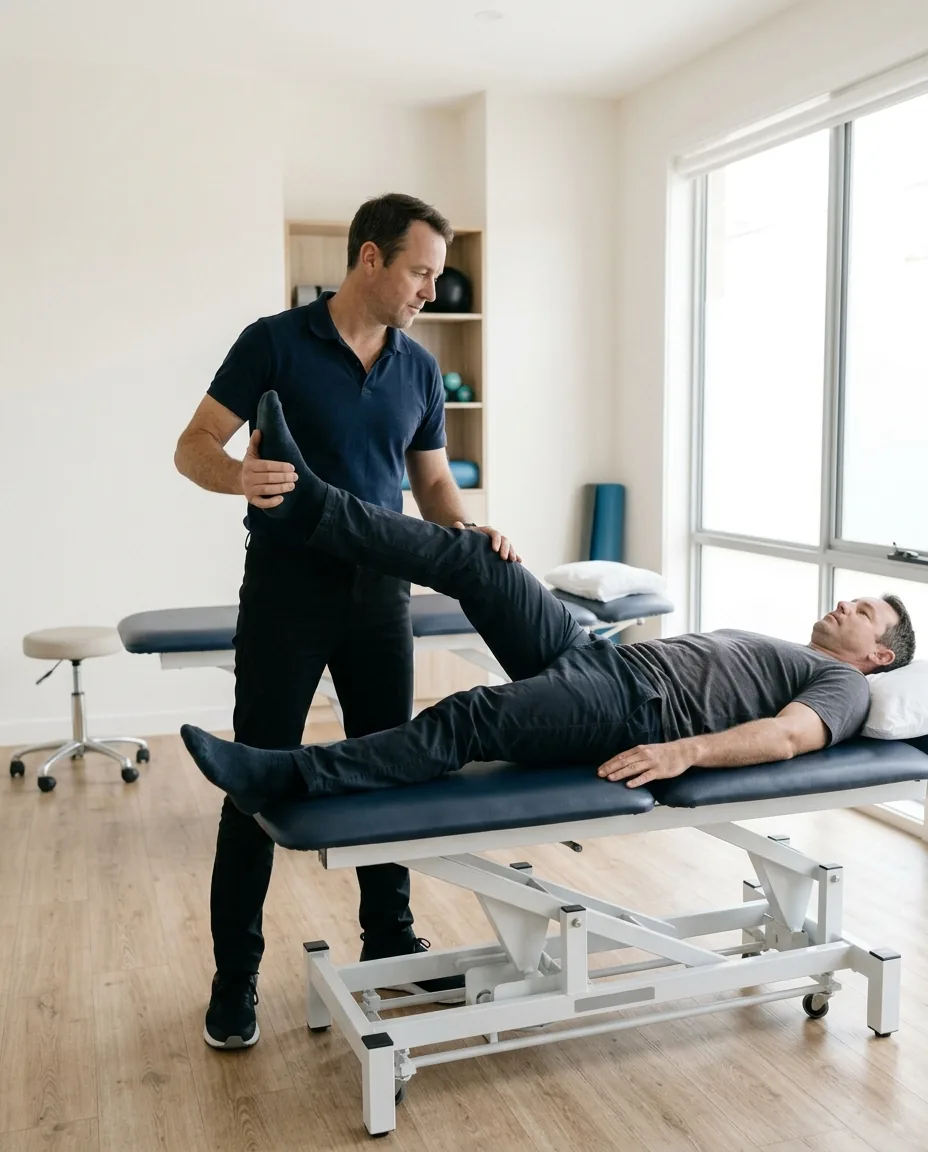
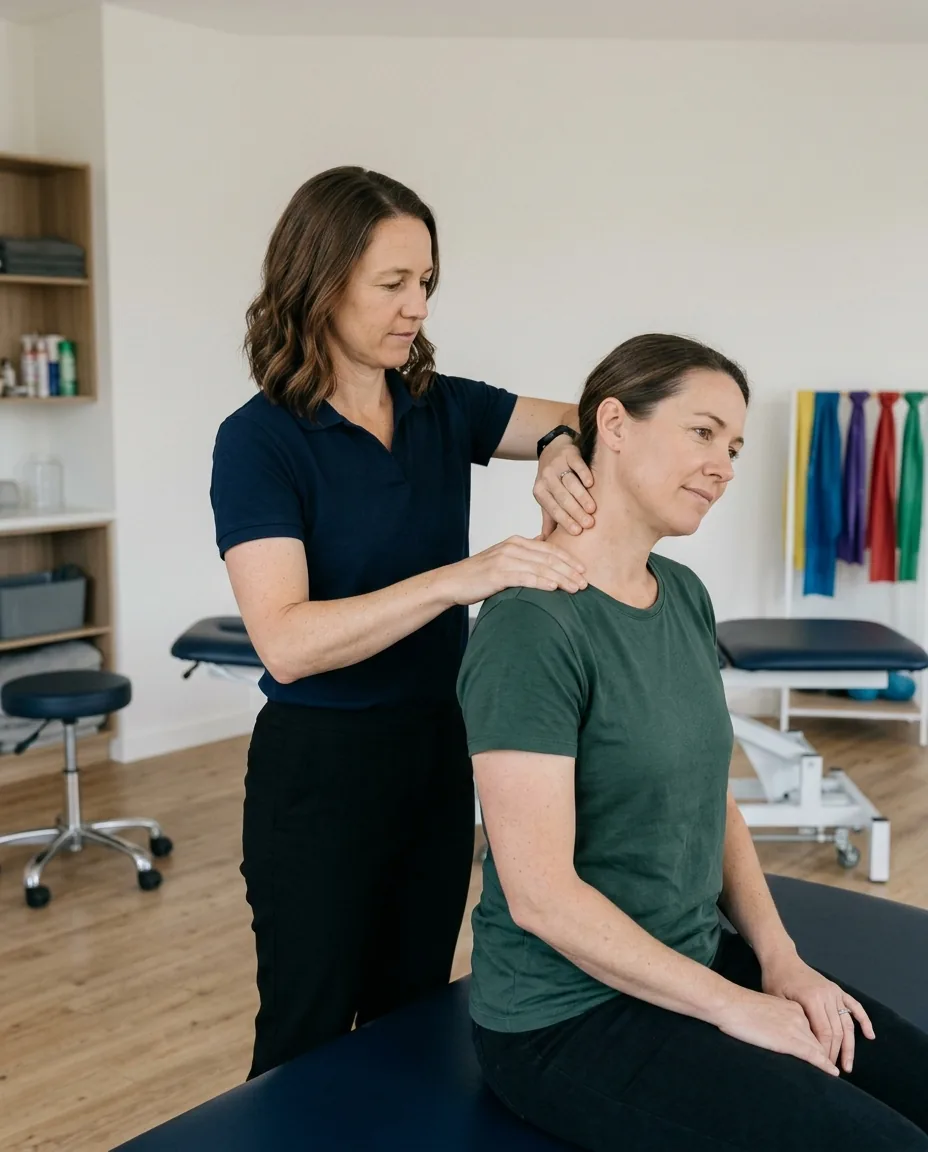
Treatment is hands-on where it helps you move, and exercises chosen for your back and your day.
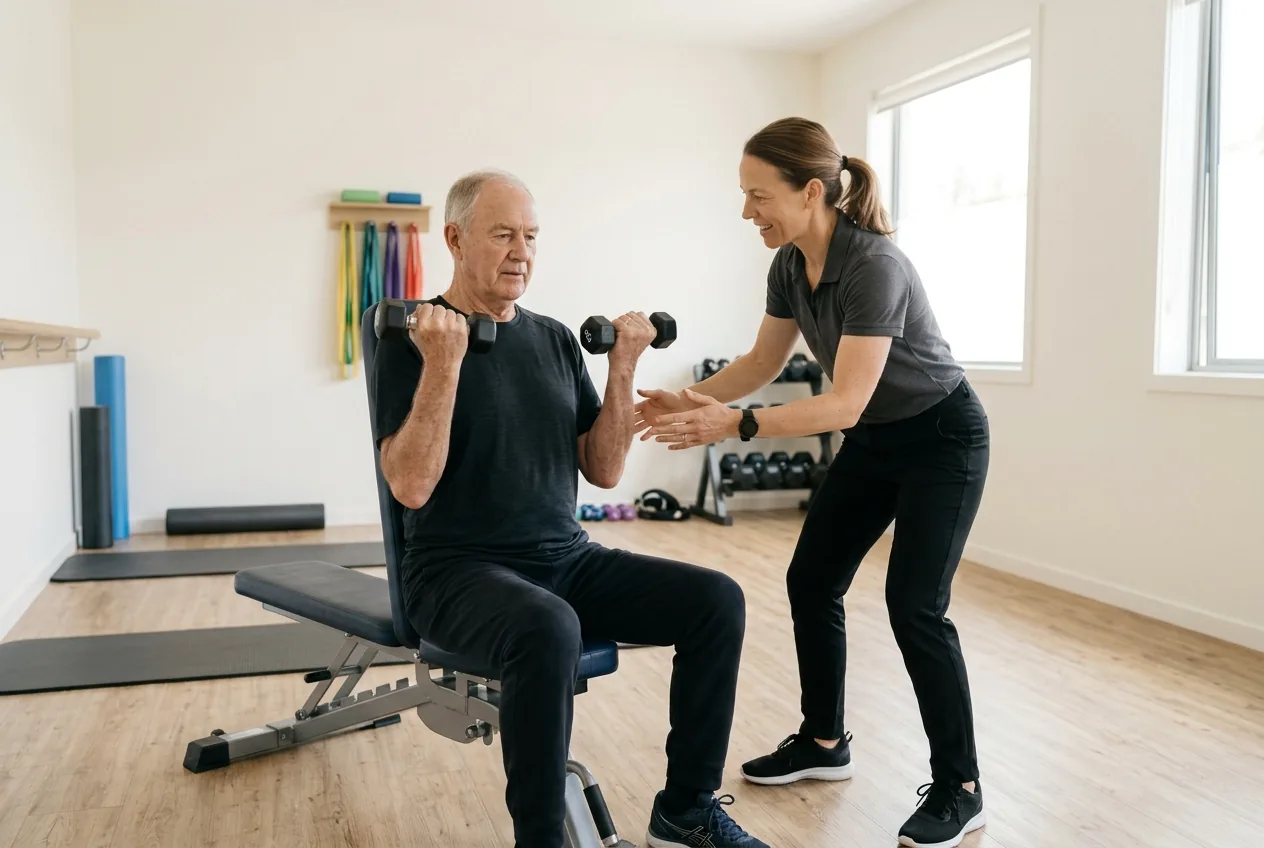
You'll have them written down or in an app, with what each one's for. Because an exercise you understand is one you'll keep doing.
We also look at how you sit and work, and what's worth changing.
Small changes first. The ones you'll actually keep.
Exercise probably still eases pain.
We'll explain what we think is keeping it going, and build the plan around what you want to get back to.
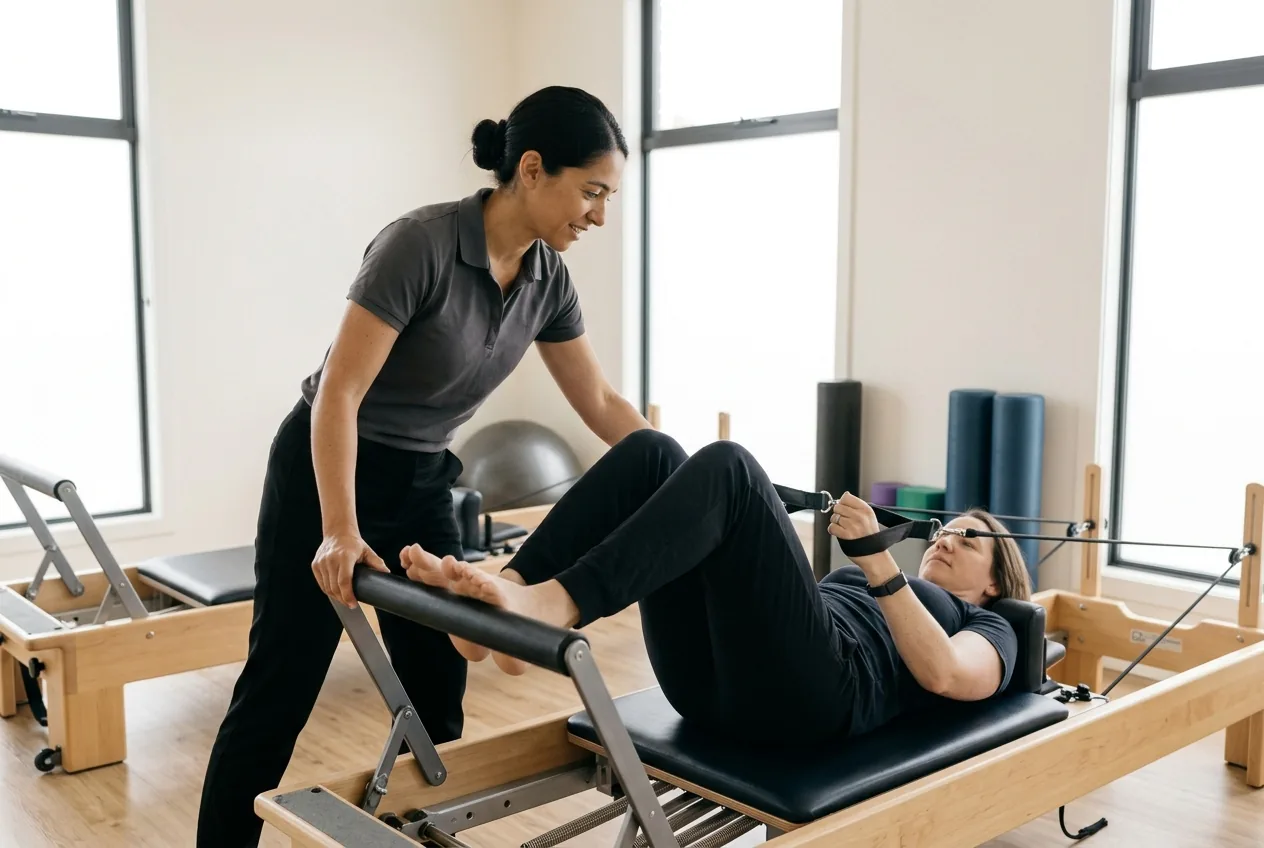
Kestrel also runs clinical Pilates in classes of 4 or fewer, with an assessment first.
Source: healthdirect, "Back pain", last reviewed June 2024
Call 000 and ask for an ambulance if you have back pain and have lost feeling or movement in your arms or legs, or you can't control your bladder or bowels.
Call 000 or go to your nearest emergency department if:
See your GP if it isn't getting better after about 6 weeks, or it's stopping you sleeping or doing everyday things.
Most sudden back pain settles on its own. While it does:
Carry on with your day as much as you can. Keeping active is the most effective way to manage this kind of back pain.
Resting your back can often make the pain worse, and keeping active can help with pain and sleep. Short rests are fine. Days in bed aren't.
A heat pack, wrapped in a tea towel, for stiffness or muscle spasm. An ice pack, wrapped the same way, for pain and swelling.
If it's not easing, or you want to know what's going on and what to do about it, that's what an assessment is for. No GP referral needed for private physio.
About 45 minutes, one-on-one the whole time.
When it started. What makes it better or worse. What you've already tried, and what happened. What you want to get back to.
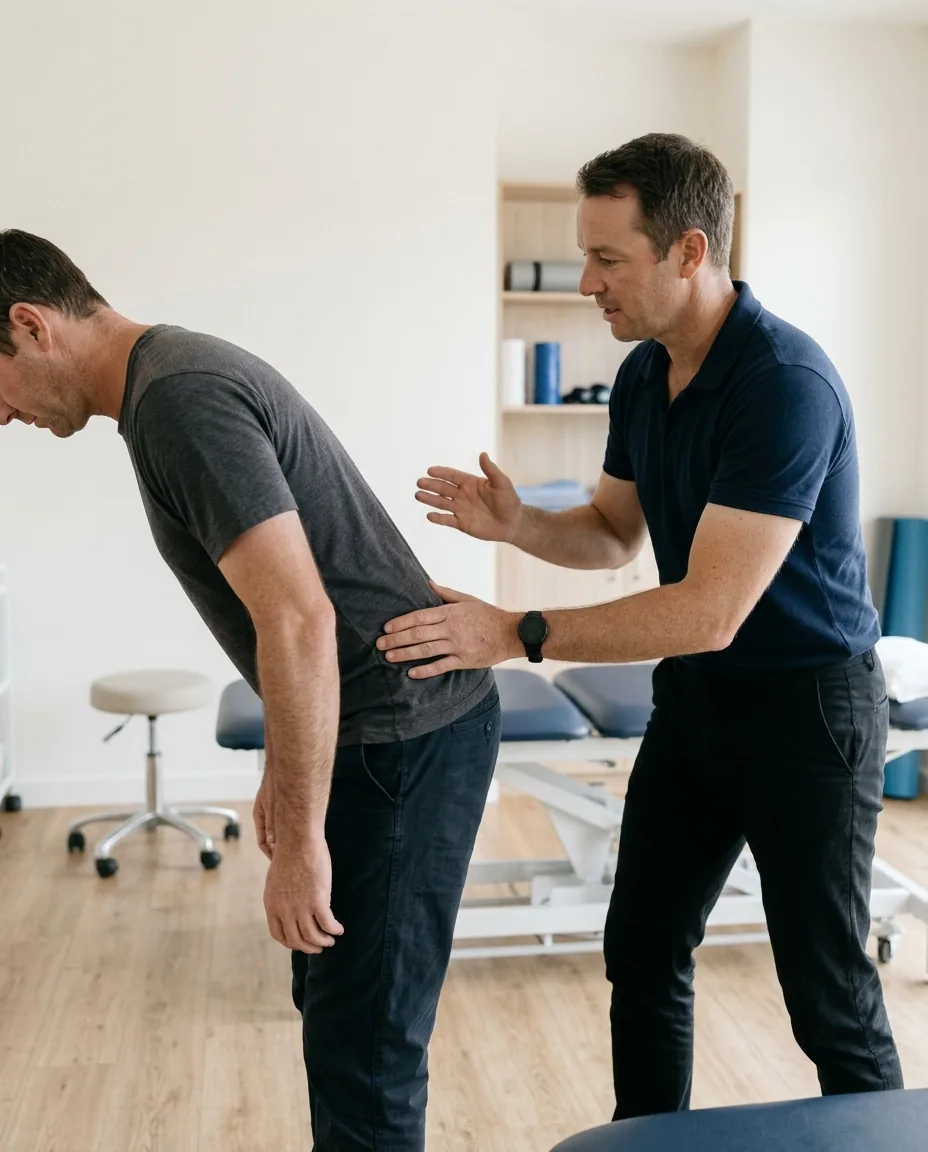
How you bend forward, back and to each side, and where it catches. How you sit, stand up and lift.
Your legs: strength, feeling and reflexes, for any sign the nerve is involved.
We'll explain each test, and ask before we touch.
What we think is going on, in words that make sense.
If you need a scan or a GP first, we'll say so.
You leave with your exercises written down or in an app, and what to change at work and at home.
We'll tell you roughly how many visits we expect, and why. If that changes, we'll tell you.
No packages to buy. You book one visit at a time.
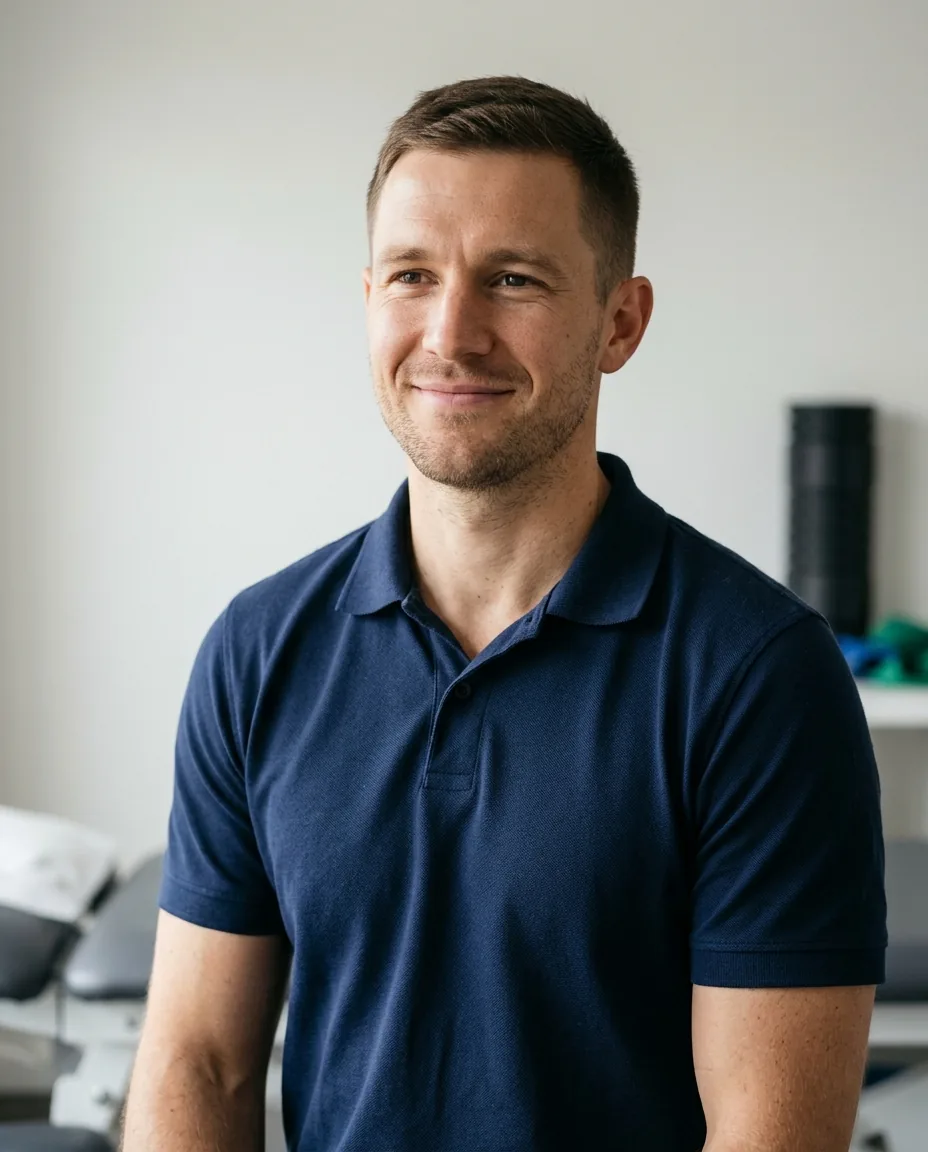
Physiotherapist
Mon, Wed, Thu, Fri“I spent four years helping office and warehouse teams with back pain before Kestrel.”
Lower back painNeck painShoulder pain
Book with TomUsually not. Most back pain can be diagnosed without an X-ray, CT or MRI. If we find signs that mean a scan would change the plan, we'll tell you why and send you to your GP. And if you've already had one: changes on a scan are normal as we get older, and don't necessarily mean your spine is damaged.
Most episodes of sudden back pain pass on their own. If yours isn't getting better after about 6 weeks, see your GP as well as us. We'll give you our own estimate at your first visit. If that changes, we'll tell you.
Often, yes, with the load or the distance changed for a while. We'll work out what your back tolerates now and build from there, rather than stopping everything.
We'll look at how you sit and work, and suggest changes worth trying. We won't pretend a perfect posture is the whole answer.
For long-lasting low back pain, exercise probably eases pain. We'll explain what we think is keeping it going, and be honest about what we don't know yet.
We'll tell you how many visits we expect at your first visit, and why. If that changes, we'll tell you. Most of the work is what you do between visits. No packages or block bookings.
Pick a time online, or call and we'll help you choose the right appointment.