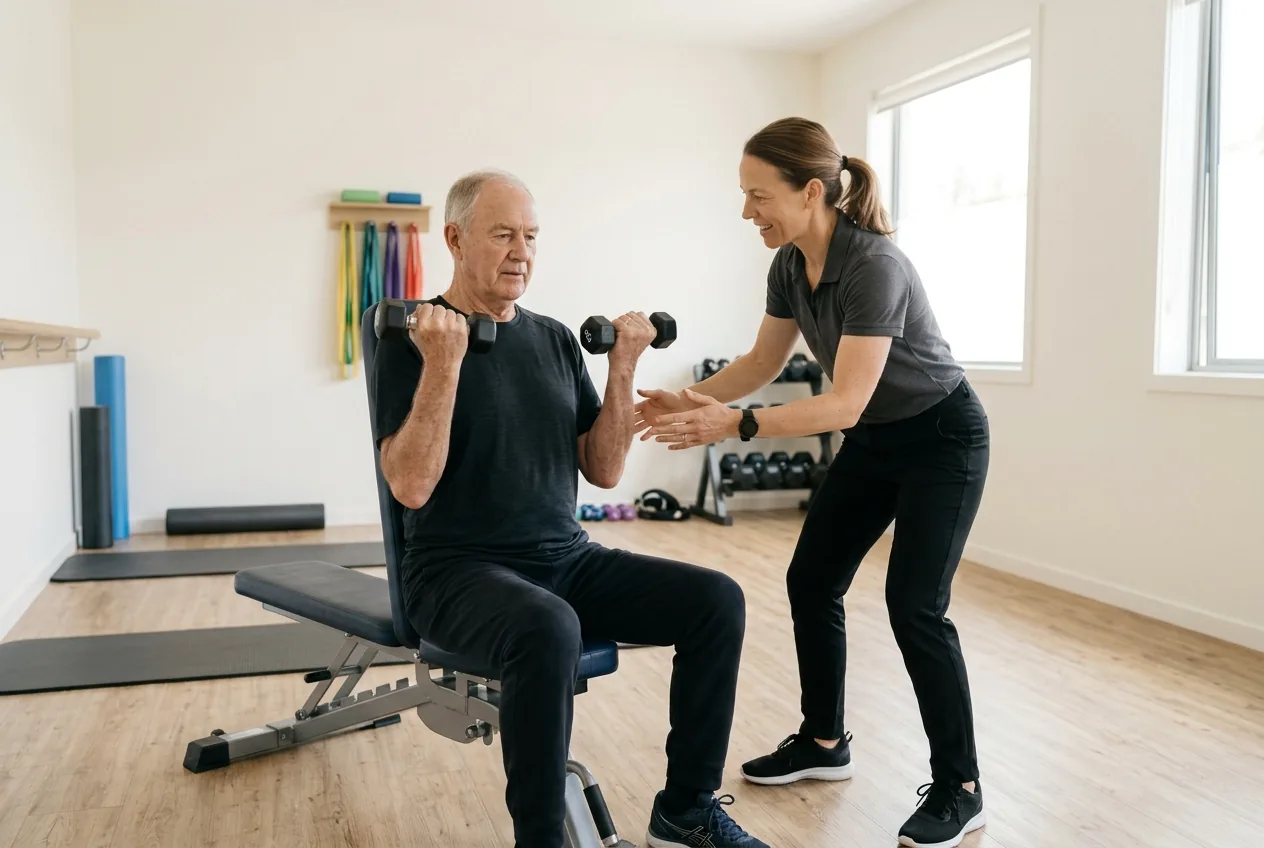
Protect it
Avoid the things that make the pain worse for the first few days. Then let your body guide you back to normal activities.

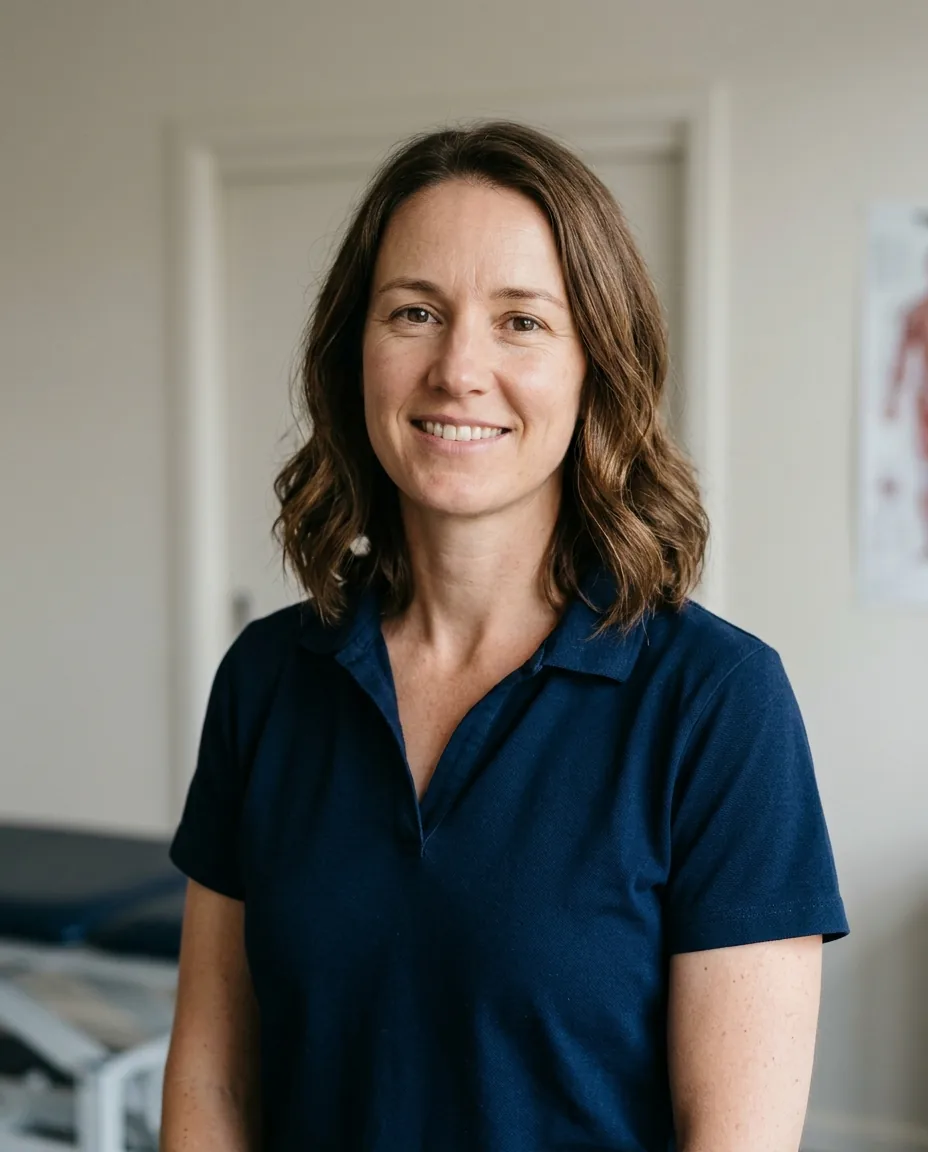 Reviewed by Ellie Brandt, Principal physiotherapist, September 2026
A torn ACL means a long stretch of rehab, and you may also need surgery. The ACL is one of four ligaments joining the bones of your knee.
The surgery decision is made with an orthopaedic surgeon, and we'll make sure you've seen one. We guide the rehab alongside them, whichever way you go.
Also called an anterior cruciate ligament tear or rupture. Includes rehab before and after an ACL reconstruction.
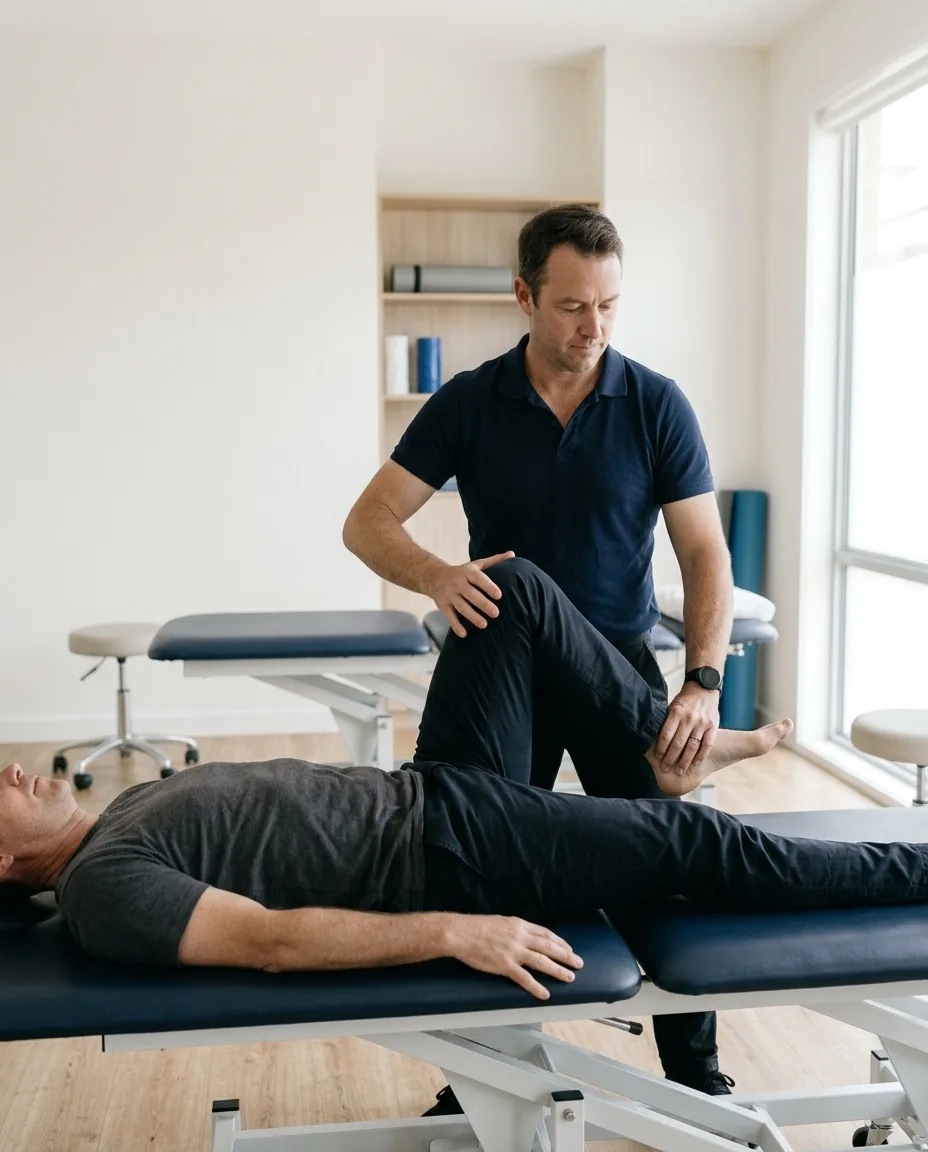
One of the knee's four ligaments. A tear leaves the knee unstable.
Your knee has four ligaments joining the bones. The ACL is one of them. A tear can be partial or complete. A tear often leaves the knee unstable. That raises the risk of further damage, such as a tear in the meniscus, the cartilage cushion inside the knee.
The knee twists while taking your weight. Common in football and netball.
Knee injuries are particularly common when the knee twists while it's taking your weight. It's common in football, netball, basketball and skiing. ACL tears happen most in young, active people.
The meniscus or cartilage can tear with it, which changes your options.
An ACL injury can come with damage to the meniscus or the cartilage in the joint. That matters, because it can change which options suit you.
Whether to have surgery is a decision between you and your doctor, made with an orthopaedic surgeon.
Our job is to make sure you have what you need to make it.
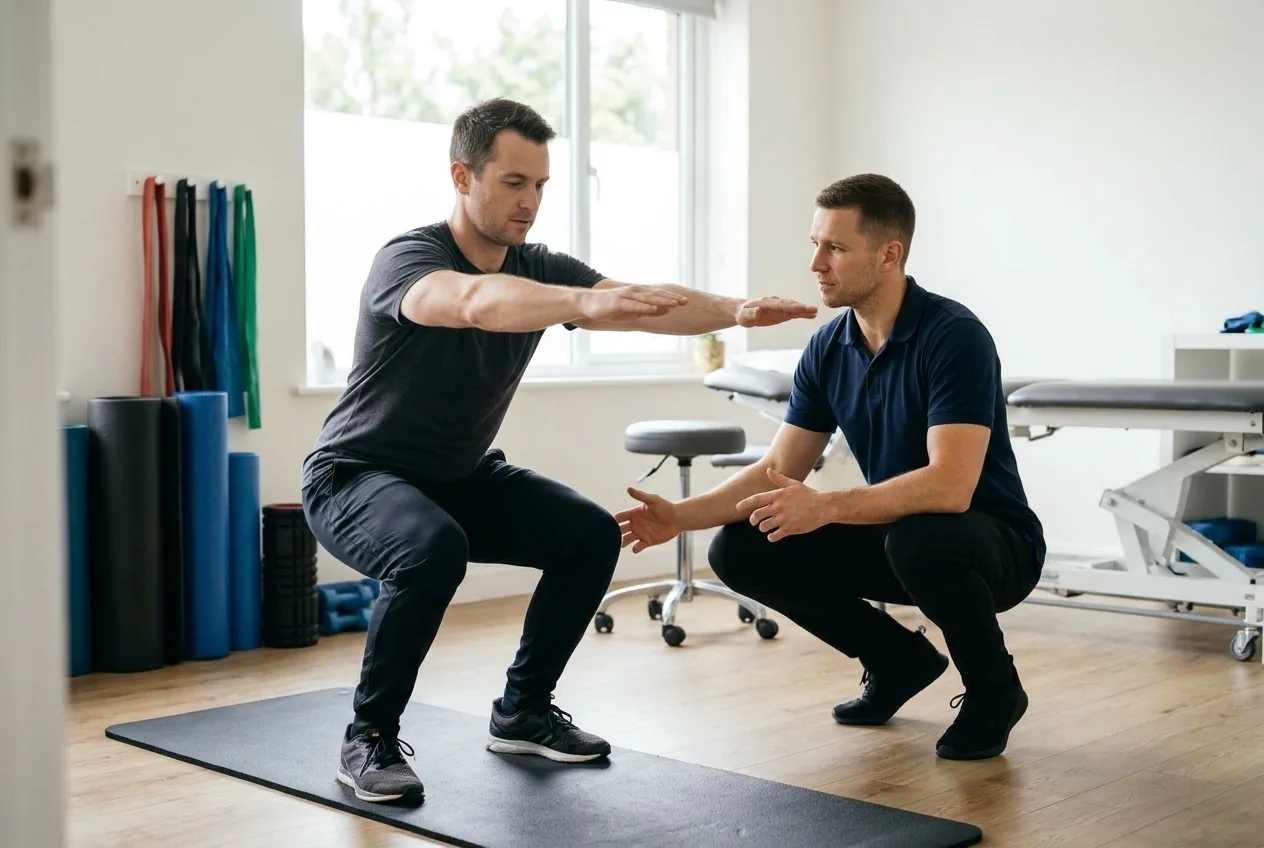
The swelling, how far the knee bends and straightens, thigh strength on both sides, and how you walk and balance if it's safe.
If we think you've injured your ACL, we'll recommend a scan through your GP, and a visit to an orthopaedic surgeon.
Some people start with structured rehab, and have surgery later only if the knee still isn't doing what they need.
Less active and older people are more likely to be happy with that path.
Exercise beforehand can build thigh strength going in.
Afterwards, we follow your surgeon's plan and build the strength and control back in stages.
Australian knee surgeons agree that structured rehab improves results after an ACL injury.
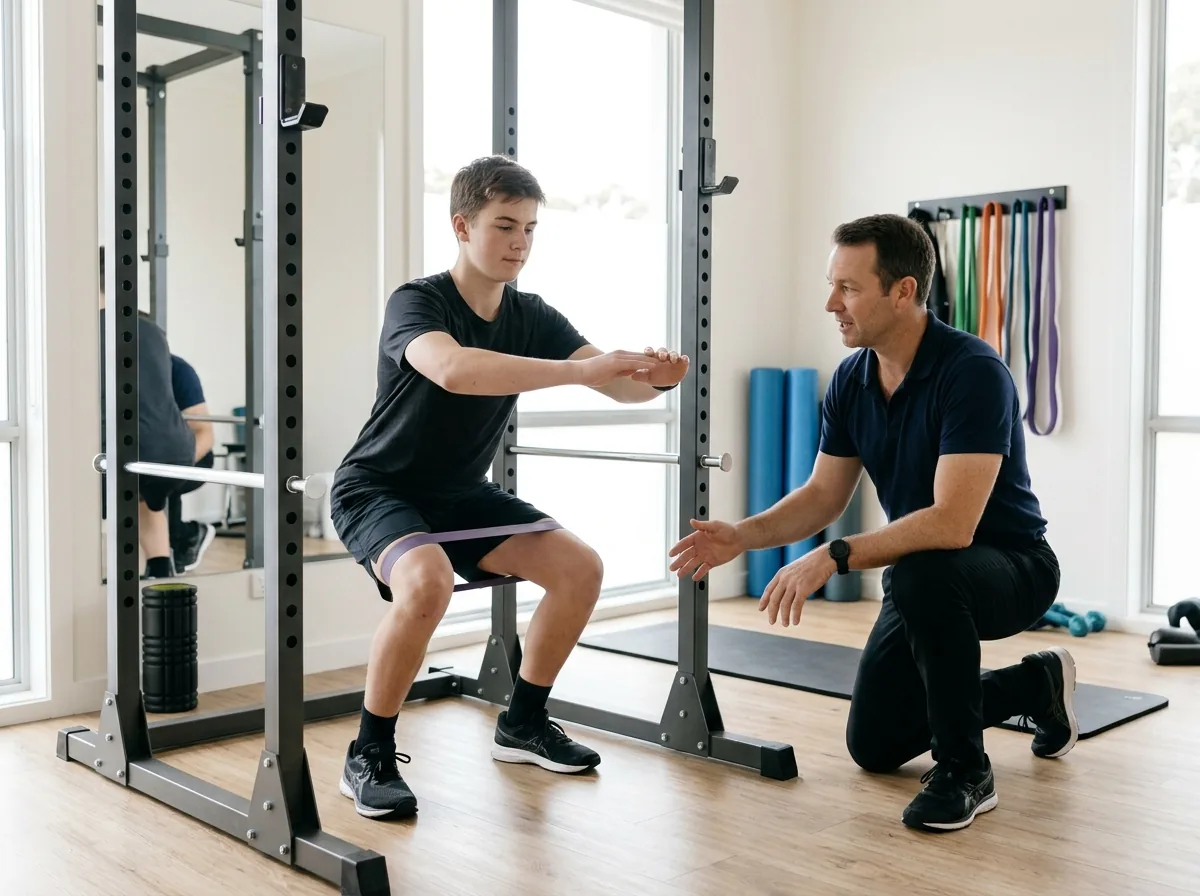
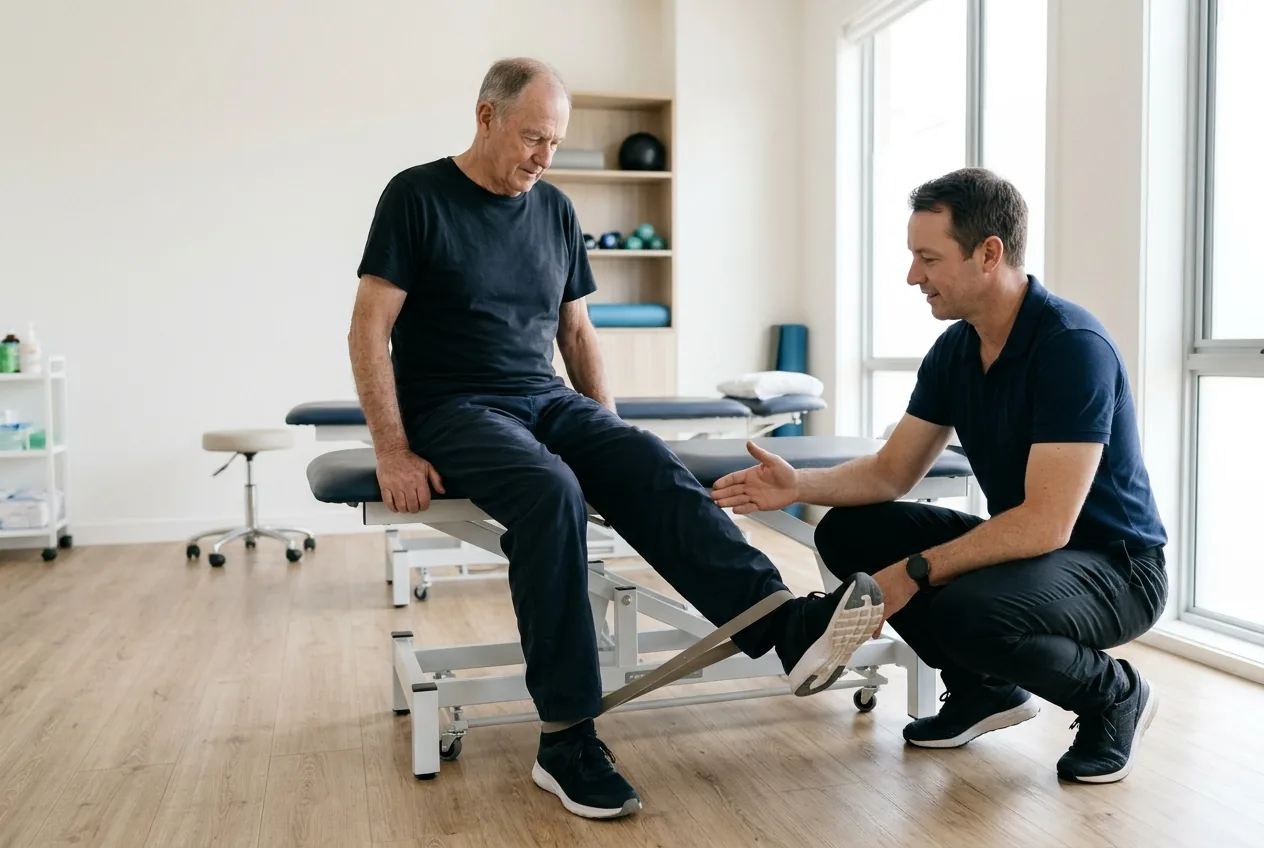
It works on strength and balance, built up in stages, and you pass a test before each step up. You'll have it written down or in an app, with what each one's for. While the knee catches up, we keep the rest of you training where it's safe to.
Source: healthdirect, "Knee injuries", last reviewed December 2023; Australian Physiotherapy Association, ACL injury management guideline, October 2022
See your doctor if:
Go back to your doctor if the pain or swelling isn't better in a few days, it's getting worse, or you get a fever or redness in your knee.
If you have an ACL injury, you should see an orthopaedic surgeon, urgently or fairly soon. Ask your GP.
If you've just hurt your knee, healthdirect's advice for the first few days is:
Avoid the things that make the pain worse for the first few days. Then let your body guide you back to normal activities.
Lie or sit with your knee raised higher than your heart, and bandage it firmly to limit the swelling.
Activity that doesn't hurt helps the tissue repair. Keep up what you can do without pain.
Don't use heat or massage on an injured knee, and avoid vigorous exercise while it's healing.
If you've been told it's your ACL, or you're waiting for surgery, weighing it up, or past it and not back to sport, that's what an assessment is for. No GP referral needed for private physio. If your knee gave way or you can't walk on it, see a doctor first.
About 45 minutes, one-on-one the whole time.
How it happened, and what you've been told so far. Bring any scan reports and letters from your GP or surgeon. What you play, and what you want the knee to do.
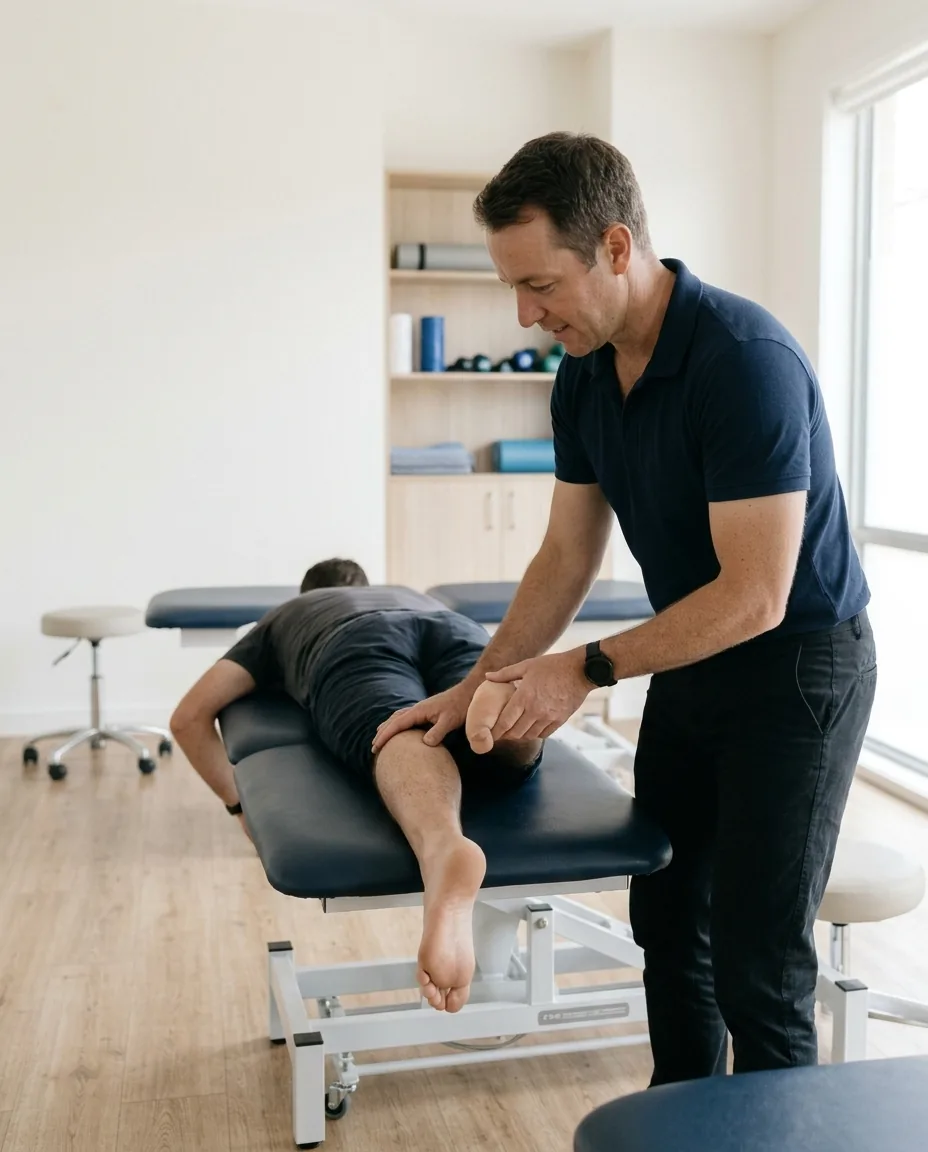
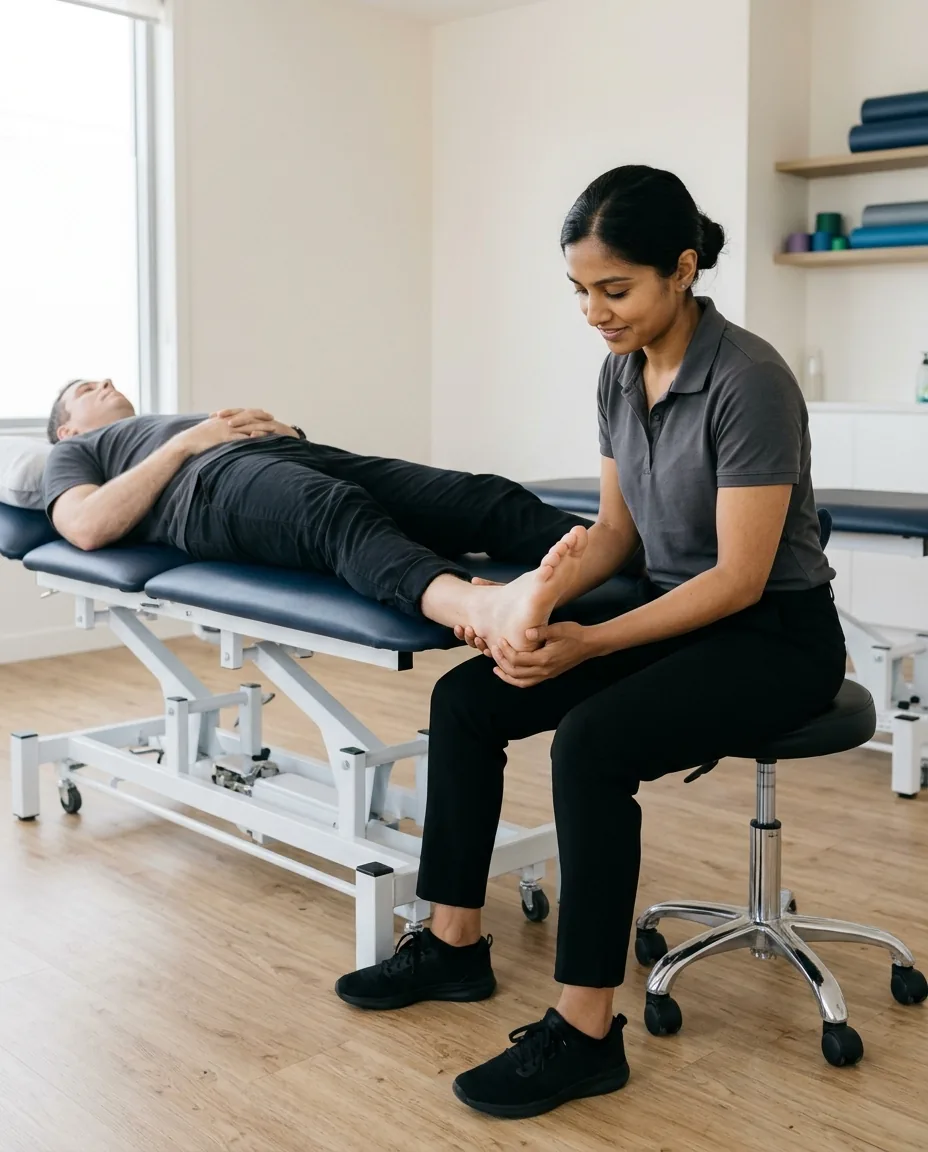
The swelling, and how far the knee bends and straightens. Thigh strength on both sides.
How you walk and balance, if it's safe. If the knee is very swollen, some tests wait until it settles.
We'll explain each test, and ask before we touch.
What we think is going on, and what the research says about each path.
Who else you need to see, and when: your GP for a scan, an orthopaedic surgeon for the decision.
You leave knowing what to do this week, with your program written down or in an app.
We'll tell you roughly how many visits we expect, and why. If that changes, we'll tell you.
No packages to buy. You book one visit at a time.
MACP, APA Titled Sports and Exercise Physiotherapist
Mon–Thu“I played netball for fifteen years, so I know how much getting back on court matters.”
Knee painACL injurySprained ankle
Book with EllieIt depends on your knee, and on what you want it to do. The decision is made with an orthopaedic surgeon, and in the end it's yours. We'll explain what the research says about each path, and what it can't tell you yet.
Some people do. In one trial of young, active adults, the rehab-first group and the early-surgery group reported similar knee function at two and five years. About half the rehab-first group had surgery within five years. Rehab first doesn't suit everyone: a meniscus tear that can be repaired, for instance, rules it out. For under-18s, the research is thin.
If we think you may have injured your ACL, we'll usually recommend one, through your GP. Early checks of an injured knee can be misleading, and a scan shows what else may be hurt.
It can build thigh strength before the operation. Whether that strength lasts after surgery is less clear, and the research is limited. Ask your surgeon what they'd like you to work on while you wait.
Nobody can promise that. In the one trial that compared the two paths, both groups reported similar knee function years later, but the research can't say how your knee will go. What we can do is measure it: strength, how far it bends, how it lands. You'll see the numbers move, or we'll change the plan.
Walking: let the knee guide you, and talk to your doctor if you can't put weight on it. Driving: only when you can control the car safely, and after surgery, when your surgeon says so. Sport: we won't give you a date at the first visit. Rehab moves in stages, and you pass a test, like a hop, before each step up. Your surgeon has a say too, if you've had surgery.
Pick a time online, or call and we'll help you choose the right appointment.